Most team activities never reach below the social performance layer people maintain at work. Everyone shows up as their professional persona, manages how they appear, and leaves with a shared memory rather than a genuine connection.
Breathwork is different. Not because it's novel, but because it works at the level of the nervous system. When a group breathes through an intentional pattern together, something shifts that manufactured activities simply can't replicate. This article explains exactly why — the physiology, the psychology, and what teams can do to get the most from it.
Key Takeaways
- Team breathwork quiets the social performance layer, allowing colleagues to see each other outside their roles
- Synchronized breathing aligns nervous systems into a shared physiological state task-based activities can't replicate
- Group breathwork dissolves hierarchy, builds vulnerability-based trust, and raises tolerance for hard conversations
- Skilled facilitation and integration time afterward determine whether the benefits last
- Natural retreat settings — away from office cues and screens — deepen the effect considerably
What Is Team Breathwork?
Team breathwork is a facilitated group practice where participants use guided, intentional breathing patterns to enter a shared physiological state together. Common formats include connected breathing, box breathing (4-4-4-4), and the 4-7-8 method.
Individual breathwork targets personal stress reduction or emotional processing. Team breathwork uses those same mechanisms differently — the group dynamic itself is what drives the value. It creates conditions for authentic connection between people who spend most of their time carefully managing how they appear to each other.
Team breathwork formats show up across a range of professional and wellness contexts:
- Corporate retreats and leadership offsites
- Team wellness programs
- Group retreats where building genuine connection is the primary goal
The goal is to create conditions where real connection between teammates can occur naturally, without the pressure of a structured challenge or forced activity.
Why Traditional Team Building Stays on the Surface
Escape rooms are fun. Cooking classes are memorable. Group challenges create stories teams reference for years. None of these produce vulnerability-based trust, and that's the specific ingredient high-performing teams actually run on.
The Status Problem
Most team-building activities are task-based. That means participants bring their existing workplace dynamics into the new environment: the loudest person stays loud, the quiet person stays quiet, and everyone continues running the same professional persona they run in Monday meetings.
Status monitoring doesn't drop during task-based activities because the brain regions that track reputation and manage impressions remain fully engaged. Research on social hierarchy processing shows that impression management under social observation activates the same neural networks involved in performance reviews and all-hands meetings — meaning the psychological conditions of work follow participants into the activity.
Shared Memory vs. Shared Vulnerability
Structured activities produce shared memories. What actually builds trust is shared vulnerability — the experience of being genuinely seen outside your role.
Lencioni's Five Dysfunctions model identifies absence of trust as the first and foundational team dysfunction, rooted in the fear of vulnerability. Without addressing that fear directly, team-building produces affinity at best. It doesn't produce the kind of trust that holds when real pressure arrives.
The distinction matters: affinity is built through shared experience; trust is built through shared exposure.
Breathwork bypasses the performance layer entirely — creating the psychological conditions for genuine exposure that task-based formats can't reach.
How Team Breathwork Builds Stronger Connections
The three advantages below aren't abstract. They're observable, repeatable outcomes grounded in what actually happens in the nervous system and between people during a group breathwork session.
Advantage 1: It Dissolves Social Hierarchy
When a team is lying down, eyes closed, breathing through the same pattern together, the CEO and the newest hire are having an identical physiological experience. There's no hierarchy in the breath.
Physiological synchrony research across 51 triads found that shared physiological and behavioral states predicted group cohesion and later coordinated performance. Separately, studies on synchronous movement found it increased bonding with out-group members and reduced social distance — effects that task-based interaction doesn't reliably produce.
Shared rhythmic states reduce perceived social distance and create a sense of balance between participants. Job titles temporarily lose their grip when everyone is moving through the same internal experience simultaneously.
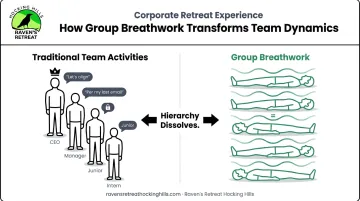
Why this matters operationally: Once colleagues have seen each other outside their roles — even briefly — the perceived threat of honest feedback drops. Psychological safety increases. The invisible barriers that slow down communication begin to soften.
Advantage 2: It Builds Vulnerability-Based Trust
Vulnerability-based trust forms when people can admit mistakes, ask for help, and show uncertainty without fear of judgment. Google's Project Aristotle studied 180 teams and identified psychological safety as the single most important dynamic in effective teams. High-safety teams were rated effective twice as often by executives, generated more revenue, and had lower turnover.
Breathwork creates the conditions for this by bypassing the usual route. Rather than building trust incrementally through repeated professional interactions, a group breathwork session moves people through shared physiological intensity (activation, discomfort, and release) together.
That shared intensity creates a bond that structured social activities, which require no genuine vulnerability, cannot produce.
What facilitators and participants consistently report afterward:
- Managers say they "finally saw their team" as people rather than output
- Quieter team members surprise their colleagues — and themselves
- Harder conversations feel more accessible because the group has a reference point: we can handle difficult things together
The experience doesn't manufacture trust artificially. It clears the specific friction — judgment, status performance, self-protection — that was blocking it from forming on its own.
Advantage 3: It Synchronizes the Group's Nervous Systems
When a group breathes in a sustained, shared rhythm, their heart rate variability and nervous system states begin to align. This is the same mechanism behind why chanting, music, and ritual breathing have been used across cultures to create group cohesion — nothing mystical, just physiology.
Research from Frontiers in Physiology found HRV synchronized when non-experts vocalized together, with respiration mediating the HRV coupling. A separate study found reduced cortisol and enhanced social connection after just 12 minutes of group chanting.
The effect inside the room is visible: faces soften, defensiveness drops, and the group's collective capacity to listen and receive each other increases in ways a two-hour workshop cannot replicate.
This advantage matters most for:
- Teams under sustained high stress
- Teams navigating organizational change
- Newly formed teams that lack relational foundation
- Leadership groups rebuilding trust after conflict
In each of these situations, co-regulation does something task-based programming can't: it resets the group's baseline before the work begins.
What Happens When Teams Skip Intentional Connection-Building
Teams without genuine connection communicate transactionally. Conflict gets avoided rather than resolved. Performance suffers not from lack of skill but from lack of trust.
The long-term cost is measurable. Gallup's 2026 State of the Global Workplace report found global engagement fell to 20% in 2025, with an estimated $10 trillion in lost productivity. Highly engaged teams, by contrast, show 23% higher profitability and 78% less absenteeism.
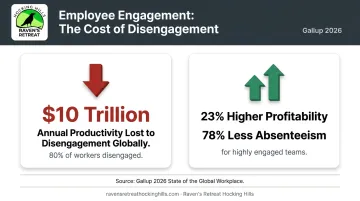
If teams only ever bond over tasks or performance outcomes, vulnerability-based trust never forms. That gap stays hidden until a real challenge surfaces — and what looked like cohesion turns out to be nothing more than professional courtesy.
How to Get the Most Value from a Team Breathwork Session
Structure and setting determine whether a session produces lasting change or just a pleasant afternoon.
Work with a Trained Facilitator
Team breathwork works best when guided by someone trained in group facilitation. Without that expertise, participants may not know how to navigate the physiological arc — and the relational opportunity gets missed entirely.
Look for facilitators with credentials from recognized bodies such as:
- GPBA (Global Professional Breathwork Alliance) — professional certification requires 400 training hours over at least two years
- IBF (International Breathwork Foundation) — professional membership requires approximately 400 hours over two years
- UKBA (UK Breathwork Association) — standards include intake forms, safety protocols, insurance, and CPD requirements
Ask specifically about their experience with groups, not just individual clients.
Follow the Three-Phase Structure
The sessions that produce the strongest relational outcomes follow a consistent arc:
- Opening — Grounding breath and guided relaxation that drops the social performance layer before the active work begins
- Active breathwork sequence — 20–40 minutes of sustained guided breathing where the group moves through the experience together
- Integration circle — A closing space for participants to share what they noticed, without pressure to perform or report outcomes
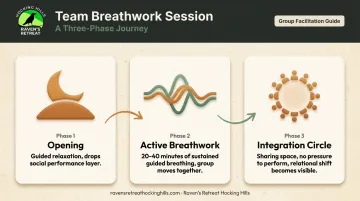
The integration circle is often where the real relational shift becomes visible. Quieter team members speak up. The manager says something human. The shared experience gets named out loud — and held together.
Common Breathwork Patterns for Group Settings
| Pattern | Structure | Best Used For |
|---|---|---|
| Box breathing | 4 counts in, hold 4, out 4, hold 4 | Grounding before the session begins |
| 4-7-8 method | Inhale 4, hold 7, exhale 8 | Calming the nervous system, downshifting arousal |
| Connected/conscious breathing | Continuous circular breath, no pause | Deeper group journeys with qualified facilitation |
Connected breathing produces the most intense shared experience. It also requires proper screening — not every participant is a good candidate — which is another reason experienced facilitation matters.
Choose the Right Environment
The setting isn't just backdrop — it's an active participant in the session.
Natural environments reduce baseline cortisol, lower heart rate, and support parasympathetic nervous system activation before the breathwork even begins. Forest bathing research consistently shows lower anxiety and improved HRV in natural settings compared to urban environments.
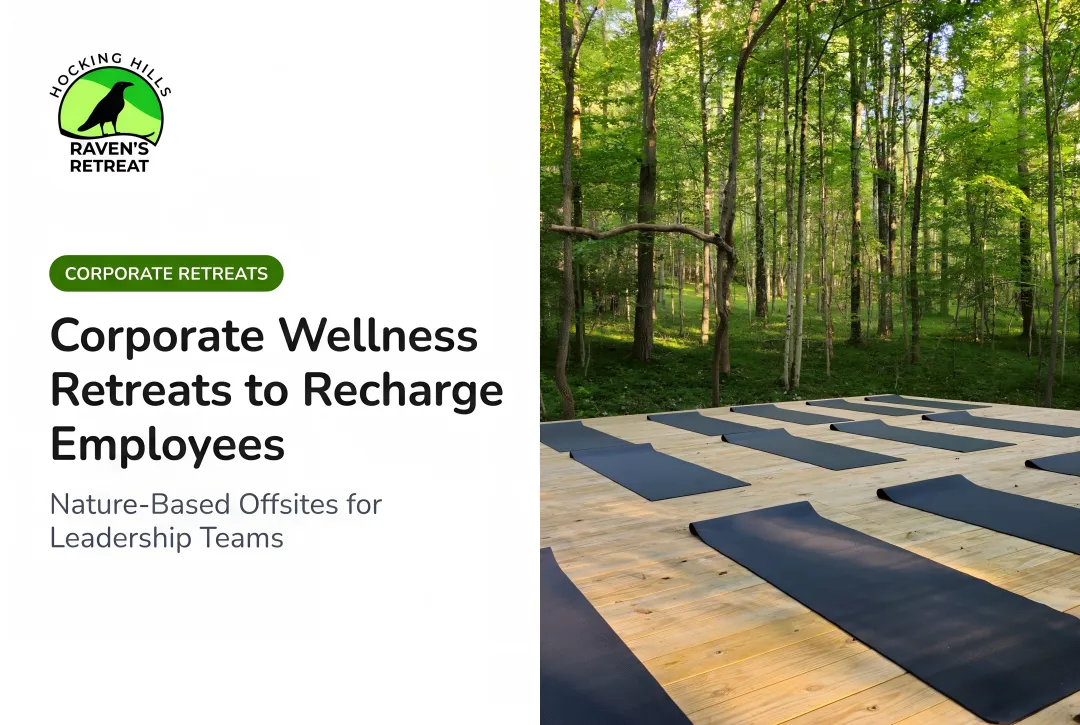
For corporate teams, this means moving the session away from the office, screens, and familiar work cues. Retreat venues set within natural landscapes offer conditions that amplify what breathwork can do. Raven's Retreat Hocking Hills, a 58-acre nature preserve in Ohio's Hocking Hills, gives groups options for both weatherproof and fully immersed outdoor sessions — including a dedicated indoor movement space (The Shala), an elevated forest yoga platform, and forest meditation zones. Breathwork sessions at the retreat are led by Raven Morgan, a certified breathwork coach who guides groups through the full arc of activation, release, and integration.

The nervous system responds differently when it isn't primed by familiar work triggers. Getting off-site isn't a luxury; it's part of what makes the session work.
Build a Practice, Not Just a Day
One session opens a door, but the environment you choose shapes how far that door swings. Consistent practice builds a team culture where psychological safety and honest communication become the norm rather than the exception. Teams that return to breathwork together (even quarterly) report that the relational gains compound over time.
Conclusion
Team breathwork builds stronger connections because it works where it counts — at the level of the nervous system. It creates conditions for genuine vulnerability, reduces the social distance that hierarchy produces, and gives teams a shared physiological reference point that scripted activities simply can't manufacture.
The value compounds when paired with the right environment, qualified facilitation, and space for integration afterward. Teams planning a retreat should prioritize venues and programs that treat breathwork as a core element — not an afterthought squeezed between sessions. A setting like Raven's Retreat Hocking Hills, where nature immersion and intentional programming are built into the experience, gives breathwork the context it needs to actually land.
Frequently Asked Questions
What breathing patterns are commonly used in a team-building breathwork session?
The most common patterns are box breathing (4-4-4-4) for grounding at the session's start, 4-7-8 for calming the nervous system, and connected or conscious breathing for deeper group journeys. A trained facilitator selects the appropriate pattern based on the group's goals and experience level.
How do you facilitate a team-building breathwork session?
Effective sessions follow a three-phase structure: an opening that drops the social performance layer, a 20–40 minute active breathwork sequence, and an integration circle for sharing without pressure. Facilitators trained in group breathwork are essential, as they manage the physiological arc and hold the space safely.
How long should a team breathwork session last?
A full team session typically runs 60–90 minutes, with the active breathwork portion lasting 20–40 minutes. Standalone sessions benefit most from the complete arc, including integration time at the close. Shorter segments can also be embedded within a larger retreat day.
Does team breathwork require prior breathwork experience?
No prior experience is needed. A skilled facilitator designs the session for mixed groups, and participants new to breathwork can engage fully and meaningfully alongside those with more experience. Everyone can participate at whatever depth feels right for them.
What makes breathwork more effective for team bonding than typical activities?
Most team activities operate at the level of social performance — people are still managing how they appear. Breathwork engages the nervous system at a physiological level, creating genuine shared vulnerability rather than performed connection. That difference is what produces lasting relational change.
Can team breathwork be done outdoors or in a nature setting?
Outdoor and nature settings are particularly effective because natural environments reduce baseline stress and strip away the psychological triggers associated with the workplace. Participants who arrive on a nature preserve or forested retreat property begin regulating before the session even starts, which meaningfully deepens the breathwork experience.