The good news: framed correctly, a well-chosen team-building trip sells itself. According to McKinsey, disengagement and attrition cost a median-size S&P 500 company between $228M and $355M annually. Meanwhile, GBTA reports that 81% of business travelers say their most recent trip was worthwhile in achieving business objectives. The argument for getting your team out of the office has never been stronger.
This post covers six distinct trip types — each suited to different team sizes, goals, and budgets — so you can find the one that matches what your team actually needs right now.
Key Takeaways
- Shared experiences outside routine environments accelerate trust-building faster than in-office activities
- The most pitchable trip ideas connect directly to outcomes leadership cares about: retention, collaboration, and engagement
- Six core trip types exist, each suited to different team sizes, budgets, and goals
- Nature and wellness retreats measurably reduce stress and sharpen creative thinking — peer-reviewed research confirms it
- Choosing the right trip means matching the format to your team's culture, goals, and available time
Why a Team-Building Trip Is Worth Pitching to Your Boss
The era of trust falls and afternoon icebreaker games is over. Companies are shifting toward multi-day offsite experiences because the return on investment is measurable — and leadership is paying attention.
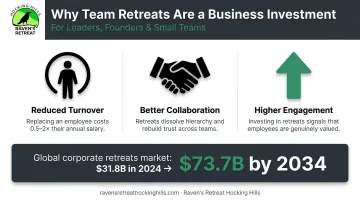
Three outcomes drive most corporate retreat decisions:
- Reduced turnover — Gallup estimates replacing an employee costs one-half to two times their annual salary; retreats that strengthen bonds directly cut churn risk
- Better cross-functional collaboration — stepping outside the office hierarchy makes honest communication easier, and those habits carry back to the workplace
- Higher engagement — shared experiences signal that the company values its people, one of the most direct engagement levers available
Those outcomes add up fast — which explains why the global corporate retreats market was valued at $31.8 billion in 2024, projected to reach $73.7 billion by 2034 (a 9.1% compound annual growth rate). This is a mainstream budget line now, not a perk.
How to Frame the Pitch
When you bring this to your boss, lead with business outcomes — not the fun factor. The difference between a "maybe" and an approved trip often comes down to how the ask is framed:
- ❌ "It would be great for morale"
- ✅ "This directly addresses our collaboration gaps and reduces turnover risk"
Tie the trip to a specific team pain point — a recent communication breakdown, a retention concern, a post-reorg reset — and the business case practically writes itself.
6 Team-Building Trip Ideas to Pitch to Your Boss
Each trip type below serves a different team goal. Choose the one that aligns with what your team needs most right now — whether that's trust-building, creative renewal, community alignment, or professional growth.
Outdoor Adventure Trip
Physical challenge is one of the most reliable ways to surface natural leadership, build trust under pressure, and create the kind of shared story that a team references for years.
Outdoor adventure trips typically involve hiking, kayaking, ropes courses, wilderness survival activities, or orienteering — experiences that push people out of their comfort zones together. Hierarchy flattens quickly when everyone is navigating a ropes course or paddling upstream.
The person who normally stays quiet in meetings often emerges as a natural leader in the field.
Look for destinations that offer:
- Varied difficulty levels so no one gets left out
- A structured facilitation option alongside free-choice activities
- Clear safety infrastructure and certified guides
| Best For | Teams that feel siloed or where hierarchy blocks honest communication |
| Ideal Group Size | Flexible — works for 8 to 50+ with proper coordination |
| Key Activities | Guided hikes, whitewater rafting, ropes courses, orienteering, wilderness campfire sessions |
Culinary Team Experience
Food-based experiences are uniquely inclusive. They involve everyone regardless of physical ability or personality type, and the act of creating something together — then sharing it — is a natural bonding mechanism.
A culinary team trip might center on a group cooking challenge, a farm-to-table dinner, a local market tour, or a chef-led competition. A firehouse study on eating together at work found a significant positive association between eating together and work-group performance — the dynamic translates beyond the workplace.
What makes a culinary destination pitch-worthy:
- Hands-on cooking facilities (not just a demo-and-watch format)
- Chef or instructor who can facilitate group dynamics, not just recipes
- Flexibility to accommodate dietary restrictions and preferences
| Best For | Diverse teams with varied fitness levels; groups celebrating milestones or welcoming new hires |
| Ideal Group Size | 8–20 for hands-on format; larger groups work with a demo-and-taste structure |
| Key Activities | Group cooking challenges, farm visits, local market tours, mixology classes, shared tasting menus |
Art & Nature Immersive Retreat
This option has the most research support on the list — and the data is worth citing to your boss.
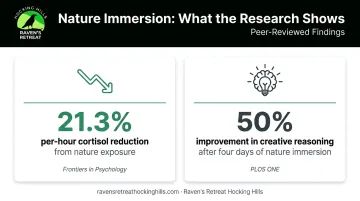
Nature immersion reduces cortisol levels measurably. A peer-reviewed study from Frontiers in Psychology found a 21.3% per-hour cortisol reduction from nature exposure beyond the natural diurnal drop, with greatest efficiency at 20–30 minute durations.
Separately, research published in PLOS ONE found that four days of nature immersion improved creative reasoning performance by 50%. For teams stuck in high-stress or highly analytical work modes, that combination is hard to argue against.
Art-based activities layer in something different: they encourage vulnerability, self-expression, and new approaches to problem-solving — skills that transfer directly back to the workplace.
A strong retreat destination in this category offers:
- A setting that genuinely integrates natural space with creative programming
- Facilitators who are practicing artists or wellness professionals (not just hotel staff running a craft activity)
- Flexible indoor and outdoor spaces that accommodate both structured sessions and open exploration
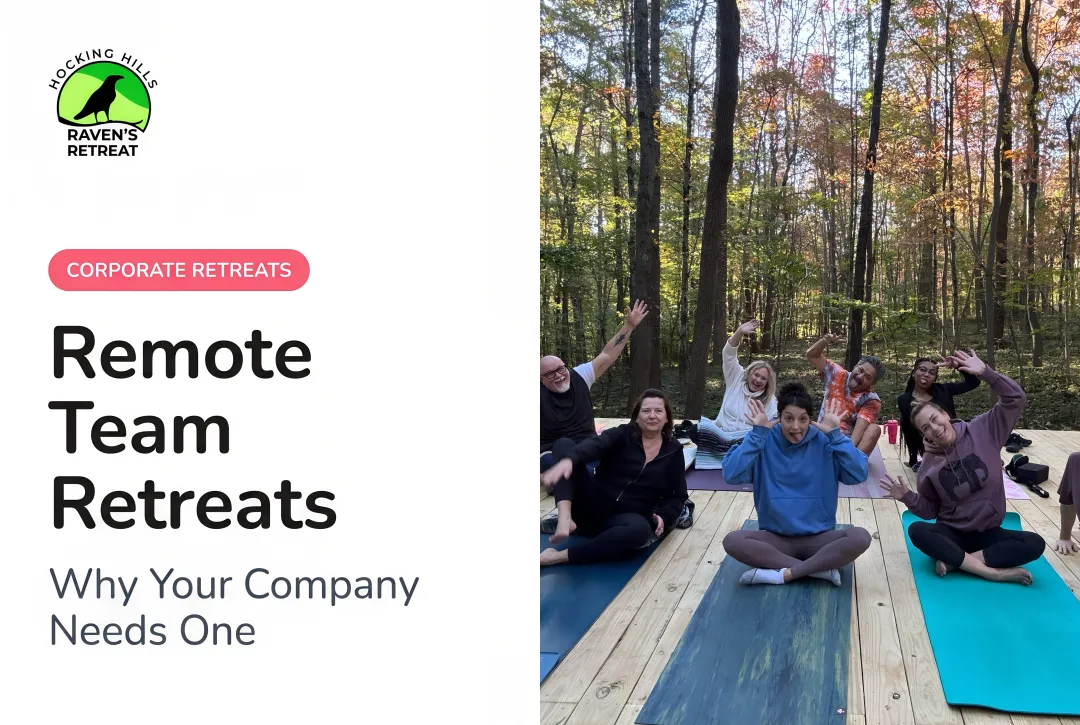
Raven's Retreat Hocking Hills is a standout example of this category. Located on a 58-acre private nature preserve near Laurelville, Ohio, it's an adults-only art and nature wellness retreat built around the integration of both. Co-owner and master sculptor Dustin Weatherby has hand-crafted the immersive art installations throughout the property — steel sculptures, wood carvings, tile murals — and offers live sculpture performances as an optional add-on for corporate groups. The retreat accommodates up to 18 overnight guests, with full property buyout available for complete team privacy. Teams of 6 to 16 find the Art Lodge's open floor plan — equipped with a presentation screen and Wi-Fi — works equally well for focused strategy sessions and creative workshops.
One corporate retreat guest, Zack, noted: "We held a 2-day small corporate retreat. Planning was easy and our team left feeling recharged, focused, and more connected than ever."
| Best For | Creative teams, leadership groups, or any team experiencing burnout; ideal for strategic planning combined with renewal |
| Ideal Group Size | 4–20; full-property buyouts support exclusive use |
| Key Activities | Forest walks, live art performances, guided sculpture or painting workshops, wellness sessions, group reflection in nature |
Volunteer & Community Impact Getaway
Shared purpose is one of the deepest team-bonding mechanisms available. Community service trips take teams to a destination specifically to work on a meaningful project — habitat restoration, food bank support, community builds, or environmental conservation.
These trips resonate particularly strongly with purpose-driven employees who want their company to stand for something beyond revenue targets. CECP's 2024 Giving in Numbers report found median employee volunteer hours grew by 75% approaching pre-pandemic levels — signaling genuine workforce appetite for this type of engagement.
What separates a strong volunteer trip from a well-intentioned but poorly executed one:
- A vetted nonprofit or social enterprise partner that manages corporate volunteers professionally
- A project with tangible, visible results by end of day — teams should leave feeling accomplished, not like they got in the way
- A debrief session that connects the experience back to team values
| Best For | Teams that value CSR; great for culture alignment and morale after difficult periods |
| Ideal Group Size | Scales well for 20–100+; many volunteer organizations prefer larger groups for high-impact projects |
| Key Activities | Trail restoration, community garden builds, food packaging events, neighborhood clean-ups, mentorship programs |
Urban Cultural Offsite
City-based offsites appeal to budget-conscious leadership because they combine productivity and bonding in one format. Teams travel to a vibrant city and explore neighborhoods, food scenes, and cultural landmarks together — anchored by a hotel or venue with meeting rooms for business sessions.
This format is easy to justify because it looks familiar to finance teams: hotel block, AV, structured agenda. The differentiation happens in what surrounds those sessions.
A strong urban offsite destination offers:
- A venue with dedicated meeting space and flexible event support
- A walkable city with cultural districts that enable self-directed team exploration
- Options for both structured group activities and informal evening bonding
Cvent's 2024 top North American meeting destinations include Nashville, Denver, Chicago, Austin, and San Diego — all cities with strong food scenes, walkable neighborhoods, and established event infrastructure.
| Best For | Large or distributed teams needing both structured meeting time and social bonding |
| Ideal Group Size | 15–200+; hotel venues accommodate a wide range |
| Key Activities | Neighborhood food tours, museum visits, city scavenger hunts, rooftop social events, locally led cultural experiences |
Skills-Based Learning Retreat
The easiest trip to pitch because it has a clearly defined learning outcome — making it feel like professional investment rather than a leisure trip.
A skills retreat takes the team to a private or semi-private venue for professional development: mastermind sessions, leadership training, strategic planning workshops, or specialized skill-building. New surroundings genuinely change how people think and talk to each other — something no conference room can replicate.
Average formal learning hours per employee dropped to 13.7 hours in 2024 (down from 17.4 the year before), according to ATD — which means there's real organizational appetite for dedicated learning time.
What makes a skills retreat destination work:
- Minimal distractions and separation from daily routines
- A facilitator or external speaker who can lead sessions
- Private enough that participants say what they actually think
| Best For | Leadership teams, sales groups, or cross-functional teams preparing for a major initiative |
| Ideal Group Size | 6–25; works best when everyone is expected to contribute |
| Key Activities | Facilitated workshops, keynote sessions, group strategy mapping, peer coaching circles, evening reflection dinners |
How to Choose the Right Team-Building Trip for Your Team
Three questions sharpen your thinking before you start pitching anything:
- What does the team actually need right now? Energy and reconnection? A creative reset? Focused professional development? The answer immediately eliminates at least half your options.
- What is the realistic budget and available time? Shorter trips (1–2 days) are easier to approve and execute; multi-day retreats deliver deeper impact but require more lead time and budget justification.
- What constraints exist? Physical accessibility, dietary needs, team size, and remote vs. local employee distribution all affect which formats are practical.
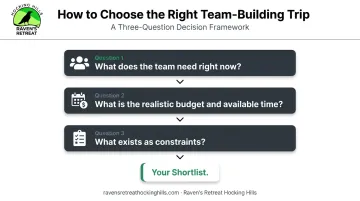
Once you've answered those three questions, you have a shortlist worth building a case around.
Survey Before You Pitch
Knowing that 80% of your colleagues would genuinely engage with a nature retreat versus a city offsite makes the pitch significantly stronger. Survey the team first — not to crowdsource the decision, but to gather data. "Our survey showed strong preference for X format, which directly addresses the collaboration gaps we've identified" lands far better than "I think people would enjoy this."
Build a Tiered Proposal
Give leadership options rather than a single take-it-or-leave-it ask. A tiered proposal might include:
- Full multi-day retreat with curated programming (ideal scenario)
- One-day or weekend offsite with a single focused activity (scaled-back alternative)
- Cost per person for each tier, with a clear rationale for your preferred option
Amex GBT's 2025 forecast found 66% of meeting professionals expect budgets to grow — so the environment for making this ask is better than it's been in years. Come prepared, and the conversation is likely to go your way.
Conclusion
The best team-building trip isn't the most expensive or the most exotic — it's the one that matches what the team genuinely needs. Frame the pitch around outcomes, not enjoyment, and the conversation shifts from "can we afford this?" to "when should we go?"
For Midwest-based teams looking for an immersive, private setting that brings together nature, art, and wellness, Raven's Retreat Hocking Hills is worth a serious look. Located just an hour from Columbus on a 58-acre private preserve, the retreat offers:
For Midwest-based teams looking for an immersive, private setting that brings together nature, art, and wellness, Raven's Retreat Hocking Hills is worth a serious look. Located just an hour from Columbus on a 58-acre private preserve, the retreat offers:
- Full property buyout for up to 18 guests
- Customizable programming, including live sculpture performances, forest bathing, guided meditation, and strategic planning sessions
- Near-perfect guest ratings across Airbnb, VRBO, and Google
It's a strong option when the goal is genuine team renewal — not just a change of scenery.
Reach out to the Raven's Retreat team to explore availability and design a retreat experience around your team's specific goals.
Frequently Asked Questions
What are good corporate team-building activities?
The most effective categories include outdoor challenges, culinary experiences, creative workshops, volunteer projects, and wellness retreats. The best choice depends on your team's specific needs — a burned-out leadership group benefits from a different format than a new team still building basic trust.
How do I pitch a team-building trip to my boss?
Lead with business outcomes: improved collaboration, reduced turnover risk, increased engagement. Include a specific destination or format recommendation, a cost-per-person estimate, and a proposed date range. Removing friction from the decision significantly improves approval rates.
How long should a team-building trip be?
One to two days works well for activity-focused outings. Two to three days allows for deeper relationship-building and is more appropriate for retreats with structured programming or strategic planning components.
What is the difference between a team-building trip and a corporate retreat?
Team-building trips primarily focus on bonding and morale through shared activities. Corporate retreats often blend strategic work sessions with relationship-building. Most modern formats intentionally combine both elements.
How much does a corporate team-building retreat cost?
Costs vary widely based on group size, destination, and programming. GBTA's 2024 data puts average business trip spend at roughly $834 per person for lodging, meals, and transportation — retreats with facilitation and activities will typically run higher. Full-property buyout options can offer better per-person value and complete privacy for smaller groups.