Key Takeaways
- Chronic stress locks the nervous system in fight-or-flight; a well-designed retreat creates conditions for genuine recalibration
- Nature immersion, breathwork, somatic movement, and sound healing each reset the nervous system through different biological pathways
- Unstructured time is non-negotiable — the nervous system needs permission to downregulate on its own timeline
- A minimum of 2–3 nights is recommended; 4–5 nights allows for a fuller arc of settling and integration
- Private, secluded settings outperform busy resorts — freedom from social performance is its own form of relief
What Is a Nervous System Reset Retreat?
A nervous system reset retreat is an intentional, extended experience designed to move the body out of chronic activation and into genuine restoration. Unlike a spa weekend or a packed schedule of wellness classes, the goal is recalibration — helping the body's stress response shift in ways that hold after you leave.
That requires understanding the two modes your autonomic nervous system operates in.
Sympathetic vs. Parasympathetic: The Two Modes at Play
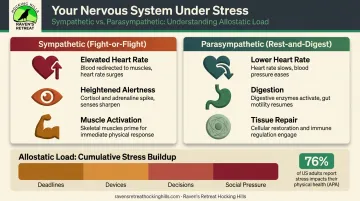
Your autonomic nervous system has two primary settings. The sympathetic system handles fight-or-flight: elevated heart rate, heightened alertness, blood redirected to muscles. The parasympathetic system handles rest-and-digest: lower heart rate, digestion, tissue repair, and recovery. Both are essential. The problem is that modern life chronically tips the balance toward sympathetic activation.
It doesn't take a single dramatic event to deplete the system. Deadlines, device notifications, constant decisions, and low-grade social pressure accumulate. According to the APA's 2022 Stress in America report, 76% of U.S. adults reported stress-related health impacts in the prior month — including fatigue, headaches, and persistent anxiety. Researchers call this allostatic load — the cumulative wear on the body from repeated stress cycles, no acute crisis required.
Why a Regular Vacation Isn't the Same Thing
When allostatic load is the problem, changing your location doesn't fix the underlying pattern. Vacations change the scenery, but they don't retrain the nervous system's baseline response.
You return from a beach trip and, within two days, the familiar tension is back. A nervous system reset retreat works differently. It uses specific practices, environmental conditions, and unstructured time to help the body learn to shift gears, not just pause temporarily.
The practical outcomes of a successful reset include:
- Improved sleep quality that continues after you leave
- Reduced emotional reactivity to ordinary stressors
- Restored capacity for focus and presence
- Lower baseline tension across the body
Signs Your Nervous System Needs a Reset
Many people who need a nervous system reset are still functioning. They're showing up to work, managing their responsibilities, holding things together. That's exactly what makes this hard to recognize.
Physical signs tend to appear first:
- Persistent fatigue that a full night's sleep doesn't fix
- Unrestorative sleep — waking up tired regardless of hours
- Chronic muscle tension, particularly in the neck, jaw, or shoulders
- Digestive irregularities that come and go without clear cause
- Getting sick more frequently than usual
Emotional and cognitive signs follow:
- Difficulty being present even during calm, enjoyable moments
- Emotional flatness or unpredictable reactivity — feeling numb most days and then disproportionately upset by small things
- A growing sense of disconnection from work, relationships, or activities that used to feel meaningful
- Low frustration tolerance and difficulty making simple decisions
In high-functioning people, this pattern is easy to miss. Everything looks fine from the outside — responsibilities covered, performance holding steady. What's harder to see is that managing and thriving aren't the same thing, and the distance between them can grow for months before it becomes undeniable.
Gallup reports that 76% of employees experience burnout at least sometimes, and 28% feel burned out very often or always. Most of them are still showing up. Still functional. Just running on far less than they realize.
Why Nature Is the Ideal Environment for Nervous System Healing
Natural environments provide specific sensory conditions the nervous system evolved to rest inside. Reduced artificial stimulation. Natural light cycles. Organic sounds — water, wind, birdsong. The absence of manufactured urgency. These aren't luxuries; they're physiological cues of safety.
The evidence supports this directly. A 2019 field study published in Frontiers in Psychology found that nature experiences of 20 minutes or more significantly reduced salivary cortisol, with the most efficient benefit occurring in the 20–30 minute range. A separate review of 28 forest-bathing field experiments found generally favorable effects on anxiety, cortisol, blood pressure, and parasympathetic indicators. The body responds to forest environments differently than it responds to offices or urban streets. That difference shows up in the data, not just in how people describe it.
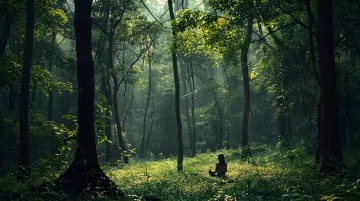
Private, secluded natural settings take this further. Public parks help. But the absence of other people, traffic noise, and the low-grade social performance that comes with shared spaces removes an entire layer of sympathetic activation that most people don't even notice they're carrying.
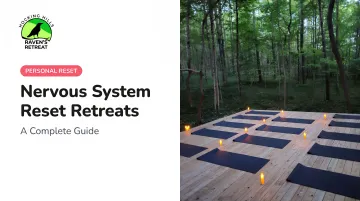
Raven's Retreat Hocking Hills operates on a 58-acre private nature preserve near Laurelville, Ohio: a rewilded property with natural springs, creeks, forest meditation zones, and over a mile of private hiking trails. The preserve is maintained as a living ecosystem, home to rehabilitated wildlife, whippoorwills, and native biodiversity. Its acoustic environment is shaped entirely by birdsong, water, and wind — no engines, no notifications.
The Role of Art and Sensory Beauty in Regulation
Immersive art is another lever for nervous system restoration, one that doesn't get enough attention in standard wellness conversations.
Engaging with beauty in a non-performative, sensory way — moving through a thoughtfully designed space, encountering sculpture in a forest, sitting with something handcrafted — activates different neural pathways than passive rest. Research on receptive art viewing suggests it can affect physiological stress markers including heart rate, and a 2018 study on art-making found it explained approximately 35% of variability in parasympathetic reactivity (a direct measure of the body's capacity for emotional regulation), suggesting a meaningful link between creative engagement and nervous system recovery.
At Raven's Retreat, master sculptor Dustin Weatherby's work is woven into the landscape rather than displayed in a gallery. Steel sculptures emerge from forest clearings. A floor-to-ceiling metal tree anchors the Art Lodge interior. A giant salamander carved from sassafras greets guests at the entrance.
Weatherby's design philosophy treats art and nature as complementary forces. His pieces are crafted from reclaimed and locally sourced materials, shaped to echo natural forms rather than impose on them. The result is an environment where beauty deepens presence instead of competing for it.
What Happens During a Nervous System Reset Retreat
The most important element most effective nervous system retreats share isn't breathwork or yoga — it's unstructured time.
The nervous system needs permission to downregulate on its own timeline. A packed itinerary of wellness activities, however well-designed, can itself become a source of low-grade pressure. The body can't fully shift into parasympathetic recovery when it's tracking a schedule.
At Raven's Retreat, this is built into the philosophy: guests can choose fully self-guided stays, designing their own agenda entirely, or opt for curated experiences with Raven and Dustin. Neither is imposed. Real rest doesn't ask for perfection; it asks for presence.
Core Modalities and Why They Work
When guided support is part of the stay, these are the practices with the strongest evidence base:
- Breathwork — Slow diaphragmatic breathing at fewer than 10 breaths per minute activates the vagus nerve, which accounts for roughly 75% of parasympathetic output. This is one of the fastest direct routes to downregulation available.
- Somatic movement and gentle yoga — Research suggests yoga increases heart rate variability and vagal dominance during practice. The mechanism is tension release stored in the body, not cardiovascular exertion.
- Sound healing — Resonant instruments and natural soundscapes shift physiological state through frequency and vibration. Evidence for singing bowls is promising but still developing; natural soundscapes have stronger, more consistent support for stress reduction.
- Forest bathing (Shinrin-yoku) — Guided sensory immersion in forest environments, connecting guests to the natural soundscape, textures, and light. Raven's Retreat facilitators hold forest bathing certification through the Association of Nature and Forest Therapy.
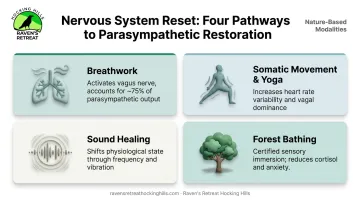
All of these are offered as optional add-ons, not requirements. Some guests need structured support; others need only the environment itself.
Solo, Couples, and Group Formats
| Format | Space | Key Features |
|---|---|---|
| Solo | Sculptor's Art Bungalow (400 sq ft) | King bed, indoor fireplace, private hot tub, pond and forest views — full schedule autonomy |
| Couples | Sculptor's Art Bungalow | Same private amenities, designed for reconnection without social obligations |
| Small Group (up to 16) | Sculptor's Art Lodge (6 bedrooms) | Communal gathering areas, flexible indoor/outdoor spaces, immersive art-and-nature environment |
Duration matters more than most people expect. Weekend trips can produce meaningful results if the environment is right, but a minimum of 2–3 nights is generally recommended. Three to five nights allows for a more complete arc: arrival and decompression, deep rest, and genuine integration before departure. Raven's Retreat offers formats ranging from 3-day to 14-day experiences.
How to Choose the Right Nervous System Reset Retreat
Not all retreat environments are built for what they claim to offer. Here's what actually matters:
Environmental criteria:
- Genuine seclusion and privacy — not a shared resort with common areas and visible neighbors
- Immersion in natural surroundings, not proximity to them
- A design philosophy centered on quiet and low stimulation, not entertainment volume
Programming criteria:
- Optional rather than mandatory wellness activities
- Flexibility to shape your own schedule
- Pre-arrival consultation to align the stay with your specific needs
Raven's Retreat offers a few ways to book. The simplest is to reserve the space directly on the website — no curated itinerary required, and you're free to arrive and design your own nervous system reset experience. You can also book the space first and add wellness experiences, guided sessions, or chef services afterward, though coordinating those in advance tends to create a more seamless stay. For a fully curated retreat shaped around your specific purpose — burnout recovery, creative reset, couples reconnection, team offsite — the complimentary consult call included with direct bookings is the best path. Raven builds a personalized itinerary around where you actually are, not a generic package.
Practical logistics:
- Drive distance matters — close enough to reach without a day of travel, far enough to feel genuinely removed. Raven's Retreat sits about one hour from Columbus, two hours from Cincinnati, and 2.5 hours from Cleveland.
- Arrival experience matters too. Pulling through a half-mile wooded driveway into a private forest preserve signals something to your body that a hotel lobby simply cannot.
Frequently Asked Questions
How long should a nervous system reset retreat be?
Most practitioners recommend a minimum of 2–3 nights, with 4–5 nights allowing for a fuller arc of settling, deep rest, and integration before departure. Even a long weekend can produce meaningful results if the environment provides genuine seclusion and restorative conditions.
What activities are typically included in a nervous system reset retreat?
Common offerings include breathwork, forest bathing, somatic movement or gentle yoga, sound healing, guided meditation, and unstructured quiet time. The balance between guided sessions and open space varies by retreat — the best formats offer these as optional tools, not mandatory programming.
How is a nervous system reset retreat different from a regular vacation?
Vacations change the environment temporarily. A nervous system reset retreat uses specific practices and restorative conditions to recalibrate the body's baseline stress response — producing physiological changes (improved sleep, reduced reactivity, restored focus) that outlast the stay.
Do I need a diagnosed condition to benefit from a nervous system reset retreat?
No. These retreats are designed for anyone running on chronic low-grade stress — which describes people who are performing well outwardly but running on empty. Those still managing but no longer thriving are often the ones who benefit most.
Can creative or art experiences support nervous system regulation?
Yes. Engaging with art in a non-performative, sensory way activates different neural pathways than passive rest. Research links receptive art viewing and non-outcome-focused creative activity to measurable parasympathetic responses — supporting both integration and presence.
What should I look for when choosing a nervous system reset retreat location?
Prioritize genuine privacy, a natural setting with reduced artificial stimulation, and flexibility in programming. A pre-arrival consultation that tailors the stay to your needs — rather than slotting you into a generic package — is a strong signal of quality.