The Quiet Antidote to an Overstimulated World
The fashion world runs on noise — show schedules stacked end to end, relentless trend cycles, the exhausting performance of being "on" for cameras and clients around the clock. Yet some of the industry's most respected creatives are now choosing days of total silence as their primary recovery ritual.
Not therapy. Not a spa weekend. Just deliberate, complete quiet.
After Paris Fashion Week, models, influencers, and creatives have been documented decamping to secluded château retreats for asceticism and complete disconnection, according to the Financial Times. This isn't fringe behavior. Trend forecasters identify the fashion crowd as early adopters of wellness movements — and right now, they're choosing silence.
What follows is why high-stimulation creatives are drawn to silent retreats, what the experience actually involves, and why the right natural setting changes everything about it.
Key Takeaways:
- Creative professionals carry a cognitive debt that ordinary vacations don't clear
- Retreats range from 3-day formats to 10-day Vipassana — beginners should start short
- Nature immersion measurably accelerates the restorative effects of silence
- Art in silence becomes a meditation anchor, not a distraction
- No prior meditation experience needed — resistance is often the best entry point
Why the Fashion World Is Trading Runway Noise for Radical Silence
The Cognitive Debt Nobody Talks About
Fashion creatives work in an environment of relentless aesthetic stimulation. Hundreds of visual inputs daily. Schedules that span continents across a single week. The performance of enthusiasm, creativity, and confidence even when none of those things feel available. This creates what's best described as cognitive and emotional debt — a deficit that accumulates faster than normal rest can repay it.
A Vogue Business survey of 600+ fashion professionals found that 65% of freelancers and 50% of full-time employees felt their work aligned with their values — but the pay, pace, and pressure data told a different story. The industry is burning through the people who make it.
Normal vacations offer scenery changes. They don't interrupt the scroll, the inbox, or the ambient hum of professional identity. Silent retreats do something different: they remove the noise entirely.
The Painful Irony for Creatives
That removal matters most for creatives whose livelihood depends on aesthetic sensitivity and original vision. The conditions of the industry work directly against both: constant input, social media performance, back-to-back deadlines each erode the quiet attention that original work requires.
The data makes the damage concrete:
- Americans check their phones an average of 186 times per day, with 71% checking within 5 minutes of a notification (2026 survey)
- The McKinsey/Business of Fashion State of Fashion 2026 report identifies wellbeing as a defining industry theme
- The global wellness market was valued at $2 trillion in 2024, projected to reach $2.4–2.5 trillion by 2028
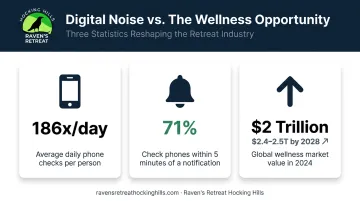
When attention is that fragmented, deep creative thought becomes nearly impossible. Silence isn't an escape from the work. For many creatives, it's the only way to protect it.
The fashion world isn't just attending wellness retreats. It's beginning to build its identity around them.
What Is a Silent Retreat, Really?
A silent retreat is a structured period — typically 3 to 10 days — where participants observe noble silence: no verbal communication, no devices, no reading, writing, or media. The goal isn't blankness. It's inward attention. Turning the volume down on the external world to hear what's actually happening inside.
Two Main Formats
| Format | Structure | Best For |
|---|---|---|
| Flexible Silent Retreat | Yoga, walking meditation, lectures allowed; 3–7 days | Beginners, creative professionals, first-timers |
| Vipassana (10-Day) | 4am start, 10+ hours daily meditation, no eye contact or writing | Experienced practitioners |
Most fashion and creative professionals start with the flexible format — and find it more than sufficient.
The Most Common Misconception
Silence doesn't mean emptying your mind. Spirit Rock teacher Susie Harrington describes it as giving practitioners space to see the patterns that keep people separate from themselves. The mind files, processes, and clears — the way a room looks better after you've sorted through the clutter rather than pushed it into corners.
For skeptical, high-achieving readers: your mind will be very busy at first. That's exactly the point.
The Unexpected Benefits of Silence for Creatives Under Pressure
Digital Detox Resets Fragmented Attention
A 2023 study found that smartphone notification sounds measurably increase cognitive load and slow response times, indicating constant involuntary distraction. A separate 2025 study of 25 young adults found that 72 hours of smartphone restriction changed cue-related neural activity in reward-processing regions, suggesting the brain's attention systems begin recalibrating within days.
For creatives whose deep-focus work requires sustained concentration, even three days of true device-free time can meaningfully reset the brain's reward pathways.
Silence Surfaces What Years of Therapy Sometimes Can't
Multiple retreat participants describe emerging from silence with greater clarity on identity, relationships, and creative direction than they'd found in years of conventional therapy. Guardian writer Lavanya Sankaran described Vipassana as "the ultimate in emotional cleansing," noting that she left feeling "cleaned out."
She also reported that her relationship with words became "more intense and playful" — and that she worked faster and with more calm afterward.
One frequently cited retreat insight captures it well: "Every silent retreat has deepened my meditation practice and given me a greater perspective on life... being able to drop identities, labels, roles, limiting beliefs." For fashion professionals whose identities are often inseparable from their professional performance, that kind of release — even temporary — frees up creative energy that performance and persona tend to consume.
Nature Immersion Accelerates Everything
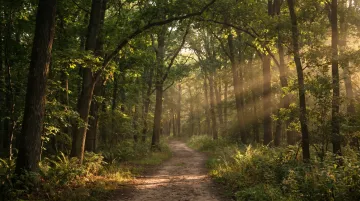
Retreats set in natural environments don't just offer pleasant scenery. Shinrin-yoku (forest bathing) research shows that time in forest environments increases parasympathetic nerve activity (the body's rest-and-recovery state), reduces sympathetic nerve activity, and measurably lowers stress markers. A 2015 study found that even 5 minutes of viewing urban green space enhanced parasympathetic activity compared to built environments.
That biological response is why retreats set in preserved forests — like the 58-acre rewilded preserve at Raven's Retreat in Hocking Hills — tend to produce effects that urban mindfulness practices rarely match.
Sharpened Perception as a Creative Asset
Retreat participants consistently report noticing previously invisible details — bark texture, the sound of wind through pines, the way light shifts across moss. For a creative whose livelihood depends on seeing, this recalibrated attention is directly transferable. Designers report returning from silence with a sharper eye for proportion, texture, and light — the raw material of their craft.
Reading People Without Words
Without verbal communication, participants become acutely attuned to energy, posture, movement, and nonverbal presence. These are precisely the skills that inform fashion's world of body, image, and aesthetic communication.
Participants commonly report leaving with:
- A heightened sensitivity to how people physically occupy space
- Stronger instincts for reading energy and intention without cues
- A quieter internal voice that listens before it edits
Why Nature and Art Create the Ideal Setting for Inner Peace
The setting of a silent retreat shapes its quality more than most people expect. Sparse, institutional environments create one kind of silence — confrontational, austere, hard to settle into. Nature-integrated, artistically intentional environments create another: generative, contemplative, accessible.
For creatives, the latter is both more comfortable as an entry point and more nourishing over time.
Art as a Bridge to Presence
Visual art encountered in silence behaves differently than art in a gallery. Without the social scaffolding of commentary, titles, and interpretation, a sculpture or carving becomes something to rest with rather than analyze. The eye settles. The mind follows. Art installations in natural settings become natural focal points for meditation — no instruction required.
Research on aesthetic experience consistently finds that viewing visual art produces measurable positive effects on psychological wellbeing — including heart-rate deceleration and reduced cortisol. The body responds to contemplative aesthetic experience in ways that parallel meditation itself.
Raven's Retreat Hocking Hills: A Living Work of Art
Raven's Retreat Hocking Hills is a 58-acre private nature preserve near Laurelville, Ohio, designed by master sculptor Dustin Weatherby as an intentional retreat environment — not a property with art in it, but a property that is art.
What guests encounter on the trails:
- Steel sculptures and animatronic installations nestled within the forest, positioned as meditation focal points rather than display pieces
- Custom wood carvings crafted from locally sourced and tornado-salvaged black walnut, designed to echo the forms of the surrounding landscape
- Designated forest meditation areas with ergonomic seating and multi-canopy views
- A deep-forest meditation zone at the preserve's lowest elevation point, beside a creek
- A 24x24-foot elevated yoga platform above the forest floor, where sunrise practice creates what guests describe as unforgettable sensory moments
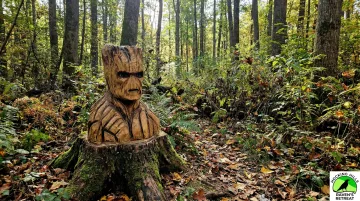
Inside the Sculptor's Art Lodge, the artistic experience continues: a hand-carved black walnut kitchen crafted from tornado-salvaged wood, tile murals including a Celtic-inspired installation, steel eclipse sculptures that double as lighting, and a giant salamander wood carving greeting guests at the entrance. Every element was made by hand. None of it is decoration.
Dustin's live sculpture performances — where guests watch a raw log become a finished piece over a few hours — offer something genuinely rare. Watching a master sculptor approach wood as a partner in dialogue, each deliberate cut made with presence rather than haste, is itself a form of instruction that requires no words.
The Practical Advantage
For creative professionals who can't spare two weeks or a transatlantic flight, proximity matters. Raven's Retreat sits within driving distance of three major Midwest cities:
- 1 hour from Columbus
- 2 hours from Cincinnati
- 2.5 hours from Cleveland
A genuine nature sanctuary — private, adults-only, no external crowds, no domestic pets — within driving distance of the Midwest's major cities makes this the kind of reset that actually fits a working professional's calendar.
The adults-only policy (21+ for bungalows, 25+ for the lodge) and the no-domestic-pets rule aren't arbitrary. They preserve what makes the property work: the natural soundscape of bees, birds, and forest wildlife that forms the retreat's primary acoustic environment. Quiet hours run from 10pm to 8am. No amplified music outdoors.
How to Know If You're Ready
The most common objection is some version of: I've never meditated, I can't sit still, I'd be terrible at this.
Readiness isn't a skill set. It's a genuine desire to reconnect with yourself. Silent retreats tend to be most transformative for exactly the people who resist them most — high-performers who have optimized everything except stillness.
Three signs a silent retreat may be overdue:
- Persistent creative block — ideas exist, but the noise makes them unreachable
- A feeling of performing rather than living — professionally successful but somehow absent from your own experience
- An inability to remember the last time you were truly unoccupied — not distracted, just still
If any of those land, start with a 3-day flexible retreat — not a 10-day Vipassana. The Creative Mornings Columbus team who visited Raven's Retreat — a group of designers, artists, and creative directors not unlike the fashion world's own — described leaving with "a renewed internal compass," with several making meaningful personal and professional changes in the months that followed. No prior meditation experience required.
Frequently Asked Questions
What is the purpose of a silent retreat?
The purpose is to remove external stimulation so attention can turn inward. Without the constant input of conversation, screens, and noise, the mind rests, processes unresolved thoughts, and reconnects with a deeper sense of self, accessing clarity that ordinary daily life rarely allows.
Can you talk at a silent retreat?
Most retreats observe "noble silence," meaning verbal communication is not permitted during the retreat period. Flexible retreats may allow Q&A with teachers or brief essential communication. Strict Vipassana retreats prohibit even eye contact between participants.
How long do silent retreats last?
Durations typically range from 3 days (ideal for beginners and busy professionals) to 10 days (Vipassana format) or longer. Shorter retreats offer meaningful benefit without requiring extensive time away — most participants find 3–5 days sufficient for a significant reset.
Are silent retreats good for burnout and anxiety?
They're particularly effective because they address the root cause: chronic overstimulation. A 2024 review of residential meditation retreats found they reduce stress, anxiety, and depression while building emotional resilience — and nature immersion adds measurable cortisol reduction through forest bathing.
Do I need meditation experience before attending a silent retreat?
No prior experience is required. Flexible silent retreats welcome beginners, with teachers guiding practice throughout. Many participants find the immersive format deepens their understanding of meditation more than years of solo practice at home.