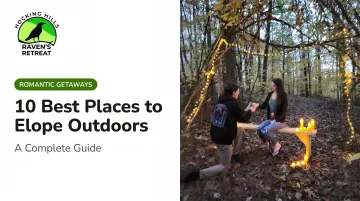
The challenge is the sheer scope of options. The US spans deserts, glaciers, old-growth forests, and coastal cliffs — and narrowing that down to one location while managing permits, seasonal access, and crowd realities is genuinely overwhelming.
This guide cuts through the noise. Below are 10 outdoor elopement locations selected for diverse landscapes, practical accessibility, and real emotional resonance — plus a framework for choosing the setting that fits your actual vision, not just the most-photographed one.
Key Takeaways
- Outdoor elopements offer privacy and natural atmosphere that traditional venues simply can't replicate
- The best locations balance stunning scenery with manageable permits and accessible terrain
- Forest, mountain, canyon, and coastal settings each create a completely different ceremony tone
- Private nature preserves offer a crowd-free, permit-free alternative to national parks
- Book peak-season national park permits 6–12 months out — popular dates fill fast
What Makes an Outdoor Elopement Location Perfect?
Not every stunning landscape makes a great elopement location. Beyond the photos, three qualities shape whether a place actually works for your day:
- Scenery that feels personal to you — not just a backdrop you recognize from Instagram
- Practical access — realistic hiking distance, guest capacity, and a clear permit process
- Atmosphere — the emotional tone the landscape sets the moment you arrive
Public Land vs. Private Venues
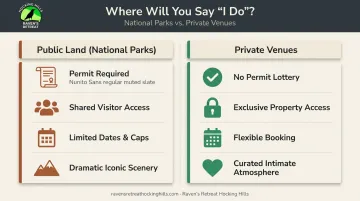
Most iconic outdoor elopement locations fall on public land — national parks, state parks, or national forests. These offer dramatic scenery but come with trade-offs:
- Special use permits required at nearly every national park
- Shared space with other visitors, even with early morning timing
- Permits sell out months in advance; RMNP caps wedding permits at just 250 per year
Private venues — nature preserves, retreat centers, private farms — operate differently. No permit lottery, exclusive access, and the flexibility to design the experience around your vision.
The "best" location is always subjective. A couple wanting alpine drama needs a different setting than one craving quiet forest solitude — so start by deciding what the day should feel like before you research where.
10 Best Places to Elope Outdoors in the US
These 10 locations were selected for diverse landscapes, emotional resonance, and a range of accessibility — from private forest retreats to iconic national park vistas.
1. Hocking Hills, Ohio
Hocking Hills is one of the Midwest's most underrated outdoor elopement settings. Ancient sandstone gorges, old-growth hemlocks, and cascading waterfalls like Ash Cave and Cedar Falls create an intimate, almost otherworldly atmosphere — without the national park crowds or permit competition.
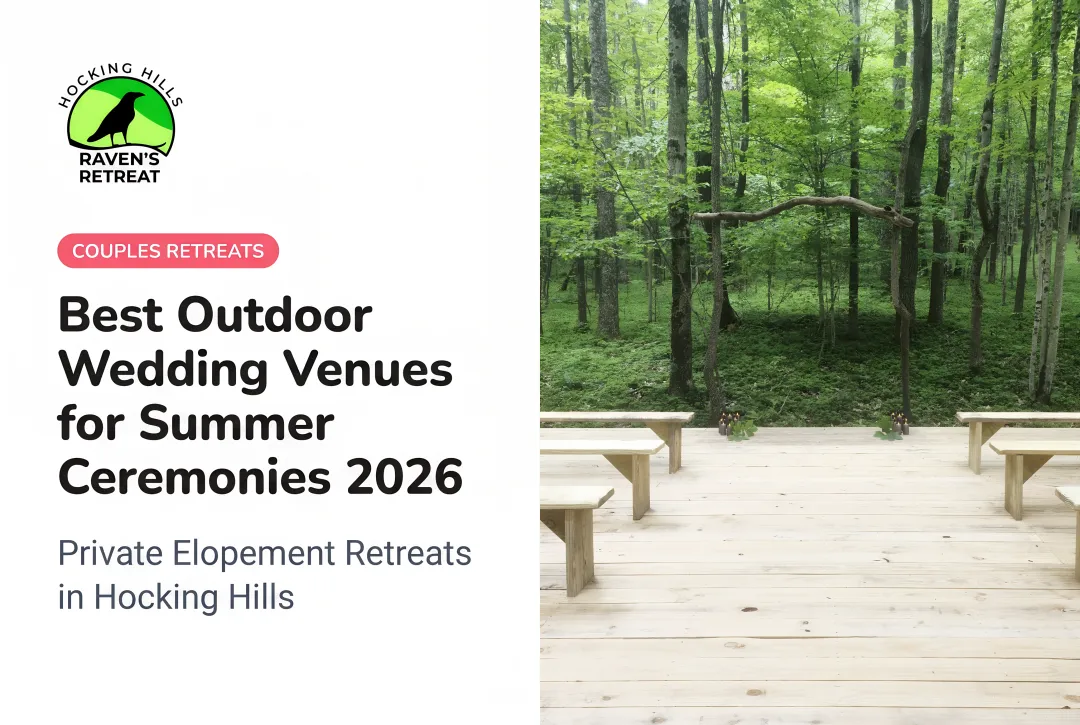
For couples wanting a fully private experience, Raven's Retreat Hocking Hills is a standout option. Set on a 58-acre adults-only nature preserve, the property features immersive art installations by master sculptor Dustin Weatherby, a dedicated 24×24 elevated forest ceremony platform with a rustic arch and guest benches, and over a mile of private hiking trails for photos.
Custom elopement packages range from $2,500–$6,000 weekdays and $4,500–$8,000 weekends, with add-ons including sound healing, forest bathing, chef-prepared delicious, healthy meals, and live sculpture performances. Both Raven Morgan and Dustin Weatherby are ordained ministers, so they can officiate your ceremony directly — one less vendor to source and coordinate.
| Detail | Info |
|---|---|
| Best Season | Spring (wildflowers) and fall (golden foliage); accessible year-round |
| Landscape Type | Old-growth forest, waterfalls, sandstone gorges |
| Key Consideration | Private venues like Raven's Retreat require advance booking; no permits needed |
2. Rocky Mountain National Park, Colorado
RMNP delivers alpine scenery few locations match — Dream Lake, Bear Lake, and Trail Ridge Road above treeline offer dramatic high-elevation backdrops in every season. Colorado also allows self-solemnization, meaning no officiant is legally required.
The trade-off is demand. RMNP limits wedding permits to 250 per year, and popular dates book up fast. Weekday morning ceremonies are strongly recommended.
| Detail | Info |
|---|---|
| Best Season | June through September |
| Landscape Type | Alpine lakes, mountain peaks, wildflower meadows |
| Key Consideration | NPS ceremony permit required (~$300); book 6–12 months ahead |
3. Yosemite National Park, California
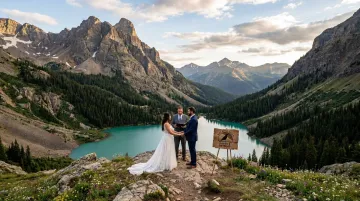
Granite cliffs, ancient sequoias, and waterfall-filled valleys make Yosemite one of the most visually dramatic elopement choices in the country. Taft Point and Glacier Point deliver jaw-dropping ceremonial backdrops — but only before the tourist crowds arrive.
Arrive at sunrise. A Yosemite special use permit costs $150 (plus $50/hour if event monitoring is required), and Tioga Road — essential for high country access — typically closes November through May.
| Detail | Info |
|---|---|
| Best Season | May through October |
| Landscape Type | Granite cliffs, valley views, waterfalls, giant sequoias |
| Key Consideration | NPS special use permit required; sunrise ceremonies essential for privacy |
4. Grand Teton National Park, Wyoming
Jagged peaks rising from open sagebrush flats — Grand Teton's scenery is expansive in a way most mountain parks aren't. Schwabacher Landing and Mormon Row provide spectacular views without demanding a strenuous hike, and the wide-open western feel suits couples who want vast wilderness on their ceremony day.
Worth noting: all large site-specific ceremony locations were fully booked for 2026 as of early in the year. Small dispersed locations remained available — plan accordingly.
| Detail | Info |
|---|---|
| Best Season | July through October |
| Landscape Type | Jagged peaks, meadows, alpine lakes, wildlife-rich valleys |
| Key Consideration | NPS special use permit ($200); weather shifts fast — build timeline flexibility |
5. Zion National Park, Utah
Towering red rock canyon walls, emerald pools, and slot canyons create a backdrop that feels ancient rather than conventionally scenic. Zion suits couples who want their ceremony to feel otherworldly.
The Canyon Overlook Trail is an accessible option with sweeping views. Summer heat is significant — spring (March–May) and fall (September–November) are far more comfortable. During shuttle season, no private vehicles are allowed on the canyon floor, so factor that logistics into your plan.
| Detail | Info |
|---|---|
| Best Season | March–May and September–November |
| Landscape Type | Red sandstone canyons, slot canyons, river corridors |
| Key Consideration | NPS permit required ($100); shuttle system in operation during peak season |
6. Columbia River Gorge, Oregon
Basalt cliffs, Icelandic-style waterfalls, and dense Pacific Northwest forest — the Gorge is dramatic and accessible, sitting just outside Portland. Latourell Falls and Multnomah Falls are the visual anchors, but weekday morning timing makes all the difference.
The moody, overcast PNW light that many visitors try to avoid actually flatters elopement photography beautifully. Footwear matters here — trails can be muddy across most of the year.
| Detail | Info |
|---|---|
| Best Season | June–August for weather; spring for peak waterfall flow |
| Landscape Type | Basalt cliffs, waterfalls, dense forest, river views |
| Key Consideration | Some sites require Forest Service or state park permits; check trail conditions |
7. Great Smoky Mountains, Tennessee/North Carolina
The Smokies are the most-visited national park in the US — over 11.5 million recreation visits in 2025 — but early morning fog rolling through ancient forest creates a fairy-tale atmosphere for couples willing to plan strategically.
Off-trail meadows and quiet ridgeline spots reward those who seek them out. The park is accessible year-round with lower elevation requirements than Rocky Mountain locations, and Gatlinburg and Asheville both serve as excellent celebration bases.
| Detail | Info |
|---|---|
| Best Season | Spring (wildflowers) and fall (foliage); year-round accessible |
| Landscape Type | Misty forest, ridgeline meadows, cascading streams |
| Key Consideration | NPS permit required; peak leaf season — weekday ceremonies essential |
8. Olympic Peninsula, Washington
Few destinations match Olympic's scenic variety. Temperate rainforest, rugged Pacific coastline, and glacier-capped peaks can all appear in a single day. The Hoh Rain Forest and Rialto Beach offer a raw, primordial quality that feels edge-of-the-world.
Coastal ceremonies require tide awareness — NPS recommends always carrying a tide table when planning along Olympic's coast.
| Detail | Info |
|---|---|
| Best Season | June through September; rainforest accessible year-round |
| Landscape Type | Temperate rainforest, Pacific coastline, alpine peaks |
| Key Consideration | Olympic National Park permit required; check tide charts before setting ceremony time |
9. Big Sur, California
Dramatic coastal cliffs, crashing Pacific surf, and redwood-lined canyons — Big Sur offers the emotional grandeur of ocean and forest together. Golden hour light on California's central coast is legendary among outdoor photographers.
Access is the practical challenge. Highway 1 is prone to landslides and closures — a February 2024 closure at Regent's Slide disrupted access for months. Research current road conditions well before your date.
Big Sur has multiple land managers. California State Parks, Los Padres National Forest, and Caltrans each control different areas, so permit requirements vary by exact location.
| Detail | Info |
|---|---|
| Best Season | April through October |
| Landscape Type | Coastal cliffs, redwood forest, ocean views |
| Key Consideration | No single permit authority; location-specific research required; Highway 1 closures can affect access |
10. Glacier National Park, Montana
Turquoise alpine lakes, wildflower meadows, and the Going-to-the-Sun Road delivering high-altitude views without a grueling hike — Glacier sees far fewer visitors than comparably spectacular parks, and it shows. Wildlife sightings, including mountain goats and bears, add a wild, unscripted quality that's hard to find elsewhere.
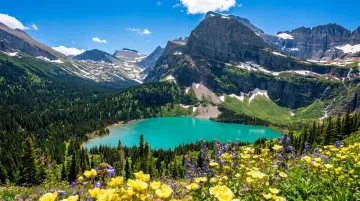
The accessible season is short. Going-to-the-Sun Road typically doesn't fully open until late June, and the park closes down significantly after September.
| Detail | Info |
|---|---|
| Best Season | Mid-July through September |
| Landscape Type | Alpine lakes, glacier-carved peaks, wildflower meadows |
| Key Consideration | NPS special use permit required; short accessible season — book early |
How to Choose the Right Outdoor Elopement Location
Start with one question: What kind of day do we actually want?
Adventurous and physically demanding vs. accessible and intimate. Wild and remote vs. curated and private. The answer should drive the entire location search.
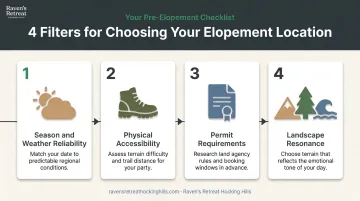
Then apply four practical filters:
- Season and weather reliability — Does your target date align with the location's best conditions? High-altitude spots may be inaccessible in early spring or late fall.
- Physical accessibility — What's the hike length? Can guests attend if needed? Is elevation a concern?
- Permit requirements — National park permits can take 6–12 months to secure. Private venues require advance booking but skip the permit lottery entirely.
- Landscape resonance — Mountain drama, forest intimacy, coastal grandeur, or canyon mystique each create a completely different ceremony atmosphere.
Consider private preserves, state parks, and off-trail meadows. These options typically offer more seclusion than famous national park locations — where strangers can wander through your ceremony — and often feel more personal because of it.
Outdoor Elopement Planning Essentials
Legal Requirements
- Marriage license: Obtained from the county clerk before the ceremony. Requirements vary by state — valid ID, an application, and a fee are standard across most states.
- Officiant: Most states require a licensed officiant. Colorado allows self-solemnization (no officiant required); Pennsylvania offers self-uniting licenses. Check your state's rules directly — requirements vary more than most couples expect.
- Permits: National parks and many state parks require special use permits for ceremonies. Private property ceremonies generally don't. Contact the managing authority directly to confirm.
Day-Of Essentials
- Plan a weather backup before you need one — mountain and coastal conditions shift fast, often mid-ceremony.
- Choose attire with mobility in mind. Trail-appropriate footwear matters far more than most couples expect until they're actually hiking to their spot.
- Build buffer time into every transition. Travel, changing, and unexpected conditions almost always push outdoor timelines off schedule.
These logistics matter, but so does understanding why outdoor elopements have grown so quickly. Zola's 2025 First Look Report, based on nearly 6,000 couples, found that garden parties ranked as the top wedding vibe for the second consecutive year — and 17% of couples were actively focused on reducing waste for a more eco-conscious celebration. Outdoor elopements answer both of those impulses: they're intimate by design and carry a naturally lighter environmental footprint.
Frequently Asked Questions
Do you need a permit to elope outdoors?
It depends entirely on the location. National parks and many state parks require special use permits for any ceremony. Private property and most non-designated public lands do not. Always contact the managing authority directly to confirm before booking.
What is the best time of year for an outdoor elopement?
Spring and fall generally offer mild weather, fewer crowds, and dramatic natural color. Summer is peak season for high-altitude wildflowers and mountain access. Winter elopements work well with layered clothing and flexible vendors — and empty venues, snow-covered backdrops, and shorter daylight hours create an atmosphere most warm-weather dates simply can't match.
How is an outdoor elopement different from a traditional wedding?
Outdoor elopements prioritize intimacy, personal meaning, and natural surroundings over venue logistics and large guest lists. The couple becomes the center of the experience rather than orchestrators of a large-scale production.
What should you wear to an outdoor elopement?
Choose attire that balances personal style with practicality — movable, layerable clothing and comfortable footwear appropriate for trails or uneven terrain. At elevation or near the coast, temperatures shift significantly throughout the day.
Can you elope in a private nature preserve?
Yes. Private nature preserves like Raven's Retreat Hocking Hills offer a permit-free alternative to national parks, with exclusive property access, designated ceremony settings, and on-site overnight accommodation — so the celebration doesn't end when the ceremony does.
How do you legally get married outdoors?
Two things are required: a valid marriage license from the county clerk (obtained before the ceremony) and either a licensed officiant or, in states that permit it, self-solemnization. The outdoor location itself doesn't affect the legal validity of the marriage.
Conclusion
The best outdoor elopement location is the one that feels most authentically like the two of you — not the most photographed, not the most visited. Whether that's a wind-swept national park summit or a private forest preserve in the Midwest, the setting should amplify the moment, not compete with it.
For permit-heavy national park locations, start the planning process early. Popular dates at RMNP, Grand Teton, and Glacier fill months in advance. For couples who want something more immediate, more private, and more curated, private venues offer real flexibility without the lottery system.
Couples dreaming of a private, art-infused forest elopement in the Midwest should explore Raven's Retreat Hocking Hills. The 58-acre nature preserve near Laurelville, Ohio hosts intimate ceremonies on a dedicated forest platform, surrounded by master sculptor Dustin Weatherby's steel sculptures and immersive installations. Add-on wellness experiences — guided meditation, sound healing, chef-prepared delicious, healthy meals — make it easy to extend a single ceremony day into a full weekend retreat.