This isn't just a spa luxury. It's a deliberate act of reconnection with measurable wellness benefits behind it.
This guide covers what couples massage therapy actually is, what to expect during a session, the real physiological and relational benefits, and how to choose the right type — plus practical tips to make the experience count.
Key Takeaways
- Couples massage means two people in one private room, each with their own dedicated therapist and personalized pressure preferences
- The "couples" label refers to the format, not the relationship — friends, siblings, and family members book these regularly
- Research shows massage shifts the body toward parasympathetic (rest-and-recover) nervous system activity, reducing stress markers
- Shared relaxation supports oxytocin release, the hormone associated with closeness and trust
- Setting matters — nature-immersed environments compound the stress-relief effects of massage
What Is Couples Massage Therapy?
Couples massage therapy is exactly what it sounds like: two people receive simultaneous massages in a single private room, each on their own table with their own licensed therapist. The word "couples" describes the format, not who can book it. Romantic partners make up a portion of the bookings, but friends, siblings, and adult family members choose this setup just as often.
This is a legitimate therapeutic modality with real clinical structure. Each person goes through an individual intake consultation before the session begins.
One person might request deep tissue work on their shoulders while the other wants a gentle full-body Swedish massage. There's no "one treatment fits both" requirement.
A typical session follows this arc:
- Pre-session consultation — each person speaks privately with their therapist about focus areas, pressure preferences, and any health considerations
- The massage itself — usually 60 or 90 minutes, conducted simultaneously in the shared room
- Post-session wind-down — many facilities include a quiet recovery period before guests are expected to move on
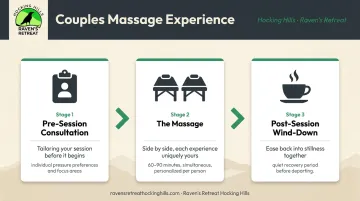
The simultaneous timing is the defining feature. Both people enter a relaxed state together — and that shared physiological shift turns out to matter more than most people expect.
What Usually Happens During a Couples Massage?
Before You Walk In
Most spas and retreat facilities recommend arriving 15–20 minutes early. That window lets you change, settle into pre-treatment amenities (robes, a relaxation lounge, herbal tea), and reach the massage room calm rather than still rushing.
The intake process happens here — each person fills out a form and speaks with their individual therapist about focus areas, preferred pressure, and anything to avoid.
The Room and the Session
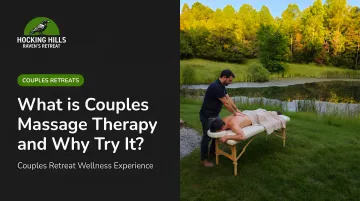
The room typically features two tables positioned side by side, soft lighting, ambient sound, and often aromatherapy diffusion. This environment is intentionally synchronized — both people ease into relaxation at the same pace, in the same space.
Once the session starts, each therapist works entirely independently based on that person's consultation. There's no requirement to match modalities. One partner might receive a slow Swedish massage while the other gets targeted deep tissue work on a problematic lower back. The shared atmosphere is what creates the bonding dimension, not identical treatment.
On whether to talk: Light conversation is permitted, but most therapists recommend going quiet once the session fully begins. Talking keeps the mind alert and partially defeats the point. Agree with your partner beforehand on the approach — it removes the awkwardness of figuring it out mid-session.
After the Session
Therapists signal the end, step out while guests dress, and often guide the pair to a post-massage relaxation space. The hour or so following a session is worth protecting. Your body is in an optimal recovery state:
- Circulation is elevated, delivering nutrients to treated muscles
- Cortisol levels drop, reducing stress and mental tension
- The nervous system shifts into deep rest mode
Protect that window. Heading straight into errands or a noisy restaurant cuts the benefits short — a quiet walk, a warm drink, or simply sitting together extends what the session started.
Why Try Couples Massage: The Real Benefits
Stress Relief and Cortisol Reduction
Massage therapy shifts the autonomic nervous system toward parasympathetic activity — the "rest and digest" state that counters the chronic stress response most people carry daily. A 2009 randomized trial found that moderate-pressure massage measurably increased vagal nervous system activity, a key marker of parasympathetic engagement.
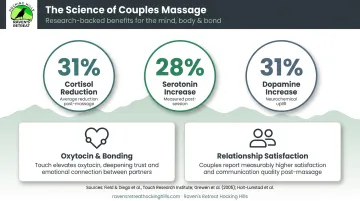
On cortisol specifically: a widely cited 2005 review by Field et al. reported average cortisol reductions of 31% alongside 28% increases in serotonin and 31% increases in dopamine following massage therapy.
A later quantitative review did find that cortisol effect sizes varied considerably across studies, so the 31% figure reflects an average across sessions, not a guaranteed outcome for every appointment. Still, the directional effect is consistent: massage tends to reduce physiological stress markers.
The Relational Dimension: Why Side-by-Side Matters
Solo massage produces genuine relaxation. A couples massage adds something a single session in a separate room cannot: synchronized calm between two people sharing the same space and the same experience simultaneously.
Physical touch and shared positive states are associated with oxytocin release — the neurochemical linked to trust, closeness, and emotional bonding. A 2012 study found oxytocin correlated with couples' affectionate touch and synchronized interactive states. A couples massage creates exactly that context: shared physical care, shared stillness, shared arrival into calm.
Research backs this up directly. A 2019 study of a Couples Positive Massage Programme — where partners exchanged massages at home over three weeks — found improvements in mental wellbeing, perceived stress, coping effectiveness, and relationship satisfaction compared with a control group.
Sleep and the Device-Free Factor
The parasympathetic activation from massage supports easier sleep onset that evening. A 2025 study found that one 45-minute relaxation massage before bedtime improved objective sleep efficiency to 89.87% versus 84.54% in controls, with diary-reported total sleep time increasing meaningfully. For couples whose rest is chronically disrupted by stress or busy schedules, this is a concrete, same-night benefit.
There's also the mindfulness dimension. Pew Research found in 2020 that 51% of partnered U.S. adults said their partner was often or sometimes distracted by a phone during conversation.
A couples massage structurally solves that problem for 60–90 minutes. No phones, no notifications — just two people fully present in the same room at the same time. That experience is rarer than it sounds.
Physical Recovery
Accumulated stress leaves a measurable physical toll. Per Mayo Clinic Health System, consistent massage benefits include:
- Decreased muscle stiffness and joint inflammation
- Improved circulation
- Reduced pain and soreness in areas like the back, neck, and shoulders
- Support for quicker recovery between periods of physical activity
For couples who carry tension from desk work, physically demanding jobs, or the physical toll of demanding schedules, this is reason enough to book a session — no special occasion required.
Types of Couples Massage to Choose From
Most couple-friendly spas and wellness retreats offer several common options:
| Type | What It Involves | Best For |
|---|---|---|
| Swedish | Gentle, flowing strokes across the full body | First-timers, general relaxation |
| Deep Tissue | Firmer pressure targeting chronic muscle tension | Chronic back/shoulder tightness |
| Hot Stone | Heated basalt stones placed on key muscle groups | Deep warmth, stress release |
| Aromatherapy | Essential oils blended into the massage | Sensory relaxation, mood support |
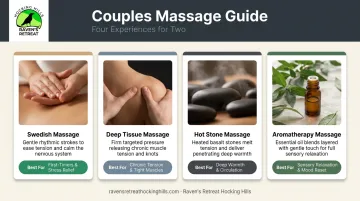
How to choose: If this is your first couples massage, Swedish is the most universally comfortable entry point. If one or both of you carry consistent physical tension, deep tissue or hot stone will deliver more lasting relief. Worth knowing: neither person has to choose the same type. Mismatched needs are the norm, not the exception.
Beyond massage type, many facilities offer enhancements like CBD oil application, salt scrubs, or herbal compresses. These typically require advance notice at booking rather than same-day requests, since some need preparation time. Ask when you book, not when you arrive.
Tips for Getting the Most Out of Your Session
A few small adjustments before, during, and after your session can significantly change what you take home from it.
Before:
- Arrive 15–20 minutes early — rushing in cancels out the first 10 minutes of the massage
- Skip heavy meals within an hour beforehand
- Avoid alcohol before the session (post-massage champagne is fine afterward, but elevated circulation means it absorbs faster, so hydrate alongside it)
During:
- Be specific in your consultation: "firm pressure on my upper back, lighter on my legs" outperforms "medium pressure" every time
- Speak up if pressure feels wrong — therapists adjust throughout; silence doesn't help either of you
After:
- Drink water
- Avoid intense physical activity for the rest of the day
- If possible, keep the evening slow — a quiet walk, a low-key dinner, or simply sitting together somewhere peaceful lets the session settle and carries the connection further into the day
Why the Setting Changes Everything
The environment surrounding a couples massage directly shapes how deeply the benefits land. A session in a quiet, natural setting — away from urban noise and digital pull — allows the nervous system to let go in a way that a busy day-spa appointment rarely achieves.
The research on nature immersion supports this clearly. A 2010 field study across 24 Japanese forests found forest environments produced measurably lower cortisol, lower pulse rate, greater parasympathetic activity, and lower sympathetic activity compared with urban settings. When massage-induced relaxation occurs within that kind of natural context, the two mechanisms compound — the effect is multiplicative, not additive.
Raven's Retreat Hocking Hills — an adults-only art and nature wellness retreat on a 58-acre private preserve near Laurelville, Ohio — offers massage as a bookable add-on experience within exactly this kind of setting. The property is built around natural immersion:
- Over a mile of private wellness trails
- Designated forest meditation zones
- Natural springs and creek sounds
- Elevated forest yoga platform
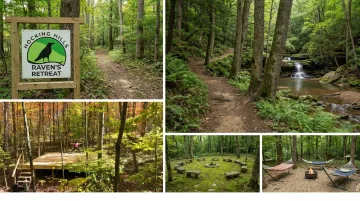
Before or after a session, couples can use the hot tub, walk the trails, or sit in one of the retreat's quiet outdoor spaces — letting the relaxation deepen and carry forward rather than evaporate the moment you step into a parking lot.
Massage at Raven's Retreat can also be layered into a multi-day itinerary alongside forest bathing, guided meditation, sound healing, yoga, or somatic breathwork — making it part of a complete nervous-system reset rather than an isolated appointment. For couples who want real restoration — not just an hour of quiet — that layered environment is what makes the difference.
Frequently Asked Questions
What usually happens in a couple's massage?
Two people are brought to a private room with two separate massage tables and one therapist each. Each person completes an individual intake consultation, then receives a simultaneous massage tailored to their own needs. Most facilities include a post-session relaxation period before guests leave.
Does massage help with cortisol levels?
Yes — massage activates parasympathetic nervous system activity and has been shown in research to reduce cortisol on average. A widely cited review reported an average 31% reduction, though individual results vary. The calming, sleepy feeling most people experience afterward reflects this shift.
Do you wear clothes in a couple's massage?
Guests typically undress to their personal comfort level and are professionally draped with a sheet throughout the session. For modalities like Thai massage, loose comfortable clothing is worn instead. If you're unsure, ask the spa or retreat team when booking — there's no standard everyone follows.
What areas do licensed therapists avoid?
Licensed massage therapists are trained to avoid certain endangerment sites including the anterior neck, directly over the spine, the kidney region, the abdomen under specific health conditions, and the groin. Intake forms and pre-session consultations exist to surface these concerns before the session begins.
Do you have to be a romantic couple to book a couples massage?
No. "Couples" refers to the two-person, shared-room format — not the relationship type. Friends, siblings, and adult family members book these experiences regularly. If two people want to experience a massage at the same time in the same space, a couples booking is the right option.
How is a couples massage different from two individual massages booked at the same time?
The key distinction is the shared room and synchronized environment. Two people in separate rooms receive the physical benefits of massage independently. A couples session creates a shared relaxation atmosphere that supports bonding mechanisms — including oxytocin release and synchronized calm — making it a relationally different experience, not just a logistical convenience.