Introduction
Most couples don't drift apart because they stop loving each other. They drift apart because life gets loud — work deadlines, notifications, mental to-do lists running 24/7 — and presence slowly erodes.
Emotional disconnection, not lack of love, is one of the most common relationship struggles today. And the fix isn't always a big conversation or a weekend getaway. Sometimes it's five minutes of sitting still together.
Mindfulness meditation for couples is the intentional practice of creating shared moments of presence and awareness. Unlike solo meditation, the relationship itself is what you're working on. You're training your nervous systems to synchronize, softening toward each other in real time — and learning to communicate slowly enough that what you say actually lands.
This article covers the research-backed reasons couples meditation works, five specific techniques you can start tonight, how to build a sustainable practice together, and what to do when one partner would rather do anything else.
Key Takeaways
- Multiple peer-reviewed studies link mindfulness to higher relationship satisfaction, greater partner acceptance, and reduced conflict
- Mindfulness trains the pause between trigger and reaction — the single most useful skill in any argument
- Five couples' techniques covered here each take five to ten minutes and require no prior meditation experience
- Environment shapes practice quality; nature settings reduce cortisol and quiet mental noise
- Even one partner practicing solo can reduce emotional reactivity, which shows up as calmer, less defensive responses during conflict
Why Mindfulness Meditation Strengthens Couples
The Core Mechanism
Mindfulness builds present-moment awareness — which sounds abstract until you consider what usually fills the space between two people: unresolved stress, background rumination, the lingering heat from last Tuesday's argument. That mental noise is what creates distance. Presence dissolves it.
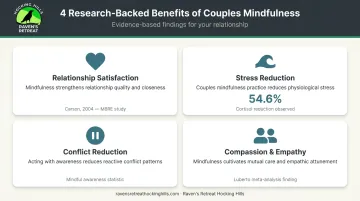
A landmark randomized controlled study by Carson et al. (2004) tested a Mindfulness-Based Relationship Enhancement (MBRE) program with nondistressed couples and found favorable effects across relationship satisfaction, closeness, acceptance of one another, and psychological distress — with benefits maintained at three-month follow-up.
A 2016 meta-analysis drawing on 10 studies and over 3,300 participants confirmed a statistically significant positive association between mindfulness and relationship satisfaction across multiple measurement tools.
Stress Is a Relationship Problem
Chronic stress makes people withdrawn, irritable, and less affectionate — none of which makes for easy intimacy. Regular mindfulness practice measurably reduces stress hormones. A 2023 RCT found that participants in a mindfulness program were 88.8% less likely to experience worsening hair cortisol compared to controls, with perceived stress reduced by 54.6%.
A calmer nervous system isn't just a wellness metric. It's the difference between snapping at your partner and being able to actually hear them.
Communication and Conflict
Mindfulness trains the most underrated relationship skill: the pause. The gap between stimulus and response — between hearing something that stings and firing back — is where couples either escalate or connect.
A 2023 cross-sectional study (n=153) found that acting with awareness was negatively correlated with conflict escalation (r=.28, p=.006) and positively associated with relationship quality. People who practice noticing their reactions before acting on them tend to fight differently — with less damage.
Compassion, Empathy, and Emotional Intimacy
A meta-analysis by Luberto et al. (2018) reviewed 26 studies with over 1,700 participants and found that meditation practices — particularly compassion and loving-kindness — produced small-to-medium improvements in both self-reported and observable prosocial behavior.
That translates to a genuine orientation of goodwill toward the person across from you at the dinner table.
There's also something structurally intimate about meditating together. Sitting in stillness with another person, without agenda or performance, is itself an act of trust. That shared vulnerability is one of the most reliable pathways to deeper emotional connection.
5 Mindfulness Meditation Techniques for Couples to Try
There's no single right approach here. The goal is presence and connection — so try more than one technique and notice what actually resonates for both of you.
Synchronized Breath Awareness
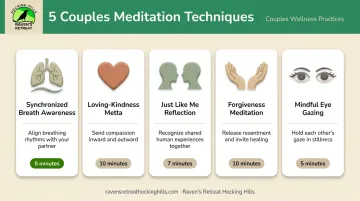
How it works: Sit comfortably facing each other or side by side. Close your eyes and each focus on your own natural breath for two to three minutes. Then gradually begin to match each other's inhale and exhale rhythm without forcing it.
Physiologically, synchronized breathing activates the parasympathetic nervous system and creates a felt sense of being "in tune." Research on couple physiological coupling shows that respiratory synchrony is associated with greater empathy and attunement between partners.
For beginners: Start with five minutes. Use a gentle timer to signal the end, then share one word describing how you feel.
Loving-Kindness Meditation (Metta)
How it works: Each partner silently directs phrases of wellbeing — May you be happy. May you be safe. May you be at ease. — first toward themselves, then toward each other. This can be done with eyes closed or, for a more intense version, while gazing softly at each other.
The point isn't just the feeling in the moment. Loving-kindness builds a durable mental habit of goodwill — a default orientation toward your partner's wellbeing rather than their shortcomings.
Studies on the practice show improved social connectedness and reduced anger, with measurable gains in positive affect toward others.
When it's most valuable: During difficult seasons — when resentment or emotional distance has crept in — loving-kindness interrupts the mental habit of fault-finding and brings you back to your partner's basic humanity.
The "Just Like Me" Reflection
How it works: Partners take turns silently — or aloud — reflecting on shared human experience:
- Just like me, my partner wants to be happy.
- Just like me, my partner has felt afraid.
- Just like me, my partner will face loss.
This practice dissolves the psychological barrier between "self" and "other" that fuels blame. When you can genuinely feel that your partner's struggle is the same human struggle you carry, resentment loses its grip.
Best used after conflict or a difficult week together. It doesn't require conversation — just a willingness to look at each other as fellow humans navigating the same difficult terrain.
Forgiveness Meditation
How it works: Each partner silently calls to mind a moment where they hurt the other or were hurt. Breathe into the discomfort — not to excuse the behavior, but to release the grip of guilt or resentment. Braithwaite et al. (2011) found forgiveness was associated with higher relationship satisfaction through increased relational effort and decreased negative conflict tactics.
The distinction matters: forgiveness is not condoning. It's releasing the weight you're carrying so you can be present again.
A structured closing: After the meditation, each partner privately writes one sentence — either an apology or an intention. They can choose whether to share it aloud. This keeps the practice grounded in accountability without turning it into a fresh argument.
Mindful Eye Gazing
How it works: Sit facing each other at eye level. Maintain soft eye contact for three to five minutes without speaking.
Expect awkwardness. Expect laughter. These are normal responses to vulnerability, not signs the practice isn't working. Foundational research by Kellerman et al. (1989) found that just two minutes of mutual unbroken gaze between strangers significantly increased feelings of love and liking. Between committed partners, the effect runs deeper.
Enhancement: After gazing, each partner shares one authentic observation: "When I looked at you, I felt..." or "What I saw in your eyes was..." Verbalizing the emotional experience deepens what the silence opened.
How to Start a Couples Meditation Practice
Start Small and Stay Consistent
The biggest obstacle isn't technique — it's time. Five to ten minutes, practiced consistently, produces more benefit than a 45-minute session once a month.
A simple structure that works:
- Choose two or three mornings or evenings per week
- Pick one technique and stick with it for three weeks before switching
- Commit to the time before you feel like doing it
Consistency matters more than duration. Research on habit formation and neuroplasticity backs this up — brief, repeated practice rewires the brain more reliably than sporadic longer sessions.
Set the Environment Intentionally
The physical space shapes the quality of practice. Small choices signal to the nervous system that this is different from ordinary time:
- Dim the lights or light a candle
- Silence phones and remove them from the room
- Choose a clean, uncluttered seated position
- If possible, crack a window — birdsong or wind through trees genuinely helps
You don't need a dedicated meditation room. A corner of the bedroom with the phones out and the lights low is enough.
Build in a Closing Ritual
The post-meditation moment matters as much as the practice itself. Without a closing ritual, meditation can feel mechanical — something to check off. With one, it becomes relational.
Options:
- Each partner shares one word or one feeling
- Place a hand on each other's hearts for ten seconds
- A brief forehead touch or simple "thank you"
This two-minute ritual reinforces why you're doing this together — not just as a wellness habit, but as a relational practice.
Navigate Differing Experience Levels
One partner may find stillness easier; the other may fidget through every minute of it. Neither is doing it wrong.
The "less experienced" partner's restlessness isn't a problem to fix — it's simply where they are. Approaching that with curiosity rather than correction is where the real practice begins.
Why Environment Matters for Couples Meditation
What Nature Does to the Nervous System
Environment isn't just backdrop — it actively shapes the depth of practice. Nature settings reduce cortisol, lower sympathetic nervous system activity, and quiet the perceptual noise that keeps couples stuck in habitual mental patterns.
A field study across 24 forests in Japan measured the physiological effects of Shinrin-yoku (forest bathing) in 280 participants. Forest settings produced a 15.8% reduction in salivary cortisol after walking, alongside a 56–102% increase in parasympathetic nervous system activity. Stanford-led research found that a 90-minute nature walk reduced rumination and decreased activity in brain regions associated with self-referential negative thought.
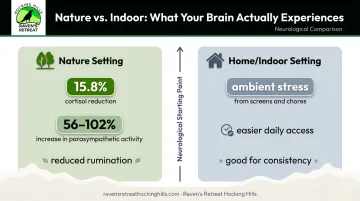
For couples whose home environments carry the ambient stress of work, chores, and screens, a nature setting creates a genuinely different neurological starting point.
Dedicated Retreat vs. Daily Home Practice
Both matter — but they serve different purposes.
A home practice builds the consistency and skill that transform how you relate day to day. A periodic immersive retreat accelerates shifts that can take much longer to achieve in everyday settings. Couples who remove themselves entirely from work, devices, and routine — even for two or three days — describe it differently than couples who only practice at home.
A Nature Setting Worth Knowing
For Ohio-area couples, or those seeking a Midwest nature wellness retreat, Raven's Retreat Hocking Hills offers an adults-only immersive environment designed specifically for this kind of relational reset.
The 58-acre private preserve (rewilded and managed as a biodiversity conservation site) features two dedicated meditation areas: a canopy-view forest meditation space with ergonomic seating and a deep-forest creek-side meditation zone at the preserve's most secluded point. The natural soundscape functions as a Living Sound Bath — birdsong, creek water, wind through hardwoods, and evening choruses of crickets and frogs that naturally slow breathing and quiet the mind.
Wellness add-ons can be customized into a couples-specific package:
- Guided meditation and somatic breathwork
- Forest bathing led by a certified ANFT practitioner
- Sound healing and yoga on a 24x24 elevated forest platform
- Private, exclusive-use booking for full access to trails and meditation spaces without other guests present

What to Do When One Partner Is Reluctant
This is more common than most people admit. One partner wants to sit and breathe together; the other would genuinely rather do laundry.
Don't push. Pressure tends to make skepticism calcify into resistance. The most persuasive argument isn't a research paper — it's watching your partner become noticeably calmer, less reactive, and more present over several weeks.
Low-Commitment Entry Points
Offer alternatives that don't announce themselves as meditation:
- A mindful walk through nature together, without phones
- Five minutes of synchronized breathing before sleep — frame it as winding down, not meditating
- A structured gratitude check-in: each partner shares one appreciation, one regret, and one thing they're hoping for
These are bridges. They create shared presence without the word "meditation" attached.
The Solo Practice Still Works
Even if one partner never joins, a solo mindfulness practice changes how that person shows up in the relationship. A 2021 study of 319 couples found that one partner's mindfulness had significant positive crossover benefits for the other's general health — even when the second partner wasn't practicing at all.
Kappen et al. (2018) found something similar: one partner's mindfulness correlated with the other feeling more accepted and reporting higher relationship satisfaction. You don't need matching practice journals. One person's steadiness has a way of reaching the other.
Frequently Asked Questions
How do couples practice mindfulness meditation together?
Couples can practice by choosing a quiet space and a shared technique — synchronized breathing, loving-kindness, or eye gazing are good starting points. Begin with five to ten minutes, use a gentle timer, and close with a brief check-in. Consistency and low stakes matter more than getting it perfect.
What is the best type of meditation for couples to build emotional connection?
Loving-kindness (metta) meditation builds compassion and goodwill toward a partner. The "Just Like Me" reflection and mindful eye gazing are also highly effective for creating presence and empathy — particularly after conflict or emotional distance.
How long should couples meditate together to see relationship benefits?
Short, consistent sessions of five to fifteen minutes, practiced a few times per week, can produce measurable benefits in communication and relationship satisfaction within several weeks. Even brief sessions count — frequency outweighs duration.
What if my partner doesn't want to meditate with me?
A solo practice still benefits the relationship by improving your own reactivity and presence — and crossover research shows it affects your partner's wellbeing too. Low-barrier shared alternatives like mindful walks or gratitude check-ins make good starting points for reluctant partners.
Can mindfulness meditation help with health conditions like high cortisol or tinnitus?
Mindfulness-based practices have solid research support for reducing stress hormones like cortisol, and a systematic review found statistically significant reductions in tinnitus distress across six of seven studies. For any specific health condition, treat meditation as a complementary practice and consult a healthcare provider.