Introduction
Routine has a quiet way of dimming things. The same restaurants, the same conversations, the same comfortable distance between two people who genuinely love each other but rarely surprise each other anymore.
Dinner dates are easy. But they're also passive — you sit, you eat, you talk about the week. Creative activities work differently. They put you in the same uncertain, slightly vulnerable space and ask you to figure something out together. That shared effort — the small frustrations, the laughs, the unexpected results — changes the dynamic in ways that sitting across a table rarely does.
This guide covers 20 couples art activities organized by style — hands-on making, expressive and emotional, and nature-inspired — so you can match the activity to your mood, energy, and setting. No art background needed. All that's required is showing up willing to make something together.
Key Takeaways
- Creative activities build connection through communication, compromise, and joint decision-making
- Art produces tangible keepsakes that become lasting reminders of shared time
- Research from Aron et al. found couples reported greater relationship quality after sharing novel, engaging experiences together
- Activities are grouped by style so you can choose based on your mood and setting
- No artistic skill needed — imperfect results often make the strongest memories
Why Art Activities Are Good for Your Relationship
Movies and dinner are fine. But they don't ask anything of you as a couple — you can sit side by side for two hours and never actually connect.
Creative activities are different. They require joint decisions, shared materials, and a willingness to look a little ridiculous in front of someone you love. That combination does something.
What the Research Says
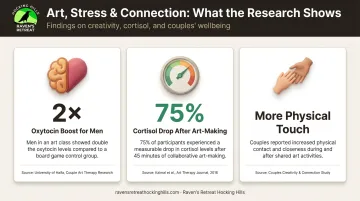
A 2019 study published in the Journal of Marriage and Family randomly assigned couples to either a board game session or an art class and measured oxytocin levels before and after. Men in the art class showed oxytocin responses twice as high as other groups, and couples in the art class reported significantly more physical touch during the activity. Small sample — but the direction is consistent with what relationship researchers have long observed.
The Gottman Institute frames "creating shared meaning" as the highest level of relationship health — built through shared rituals, values, and experiences. Art activities are, at their core, shared meaning-making.
What You Actually Gain
- Reading your partner without words: art requires you to respond to their choices and adjust in real time
- Finishing something together — even something imperfect — produces a genuine sense of "we did that"
- Making something in front of another person lowers emotional defenses in a way that serious conversation rarely does
And critically: you don't need to be good at art. A Drexel University study found that cortisol dropped in 75% of participants after just 45 minutes of art-making, regardless of prior experience. The process matters. The product doesn't.
Hands-On & Creative Activities (1–7)
Tactile activities create what researchers call "micro-moments" of cooperation — passing a tool, adjusting a color mix, restarting after something goes wrong. These small, low-stakes moments mirror real teamwork in surprisingly accurate ways.
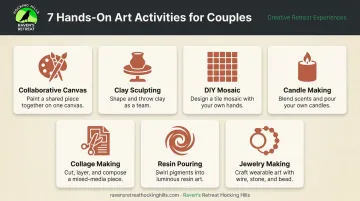
1. Collaborative Painting
One shared painting surface. Two people, either taking turns or working simultaneously.
What makes this interesting isn't the painting itself — it's the negotiation. Where does your color end and theirs begin? Do you build on what they started or carve out your own space? How couples navigate a shared project often mirrors how they navigate shared decisions in everyday life.
2. Metal Forging and Woodwork
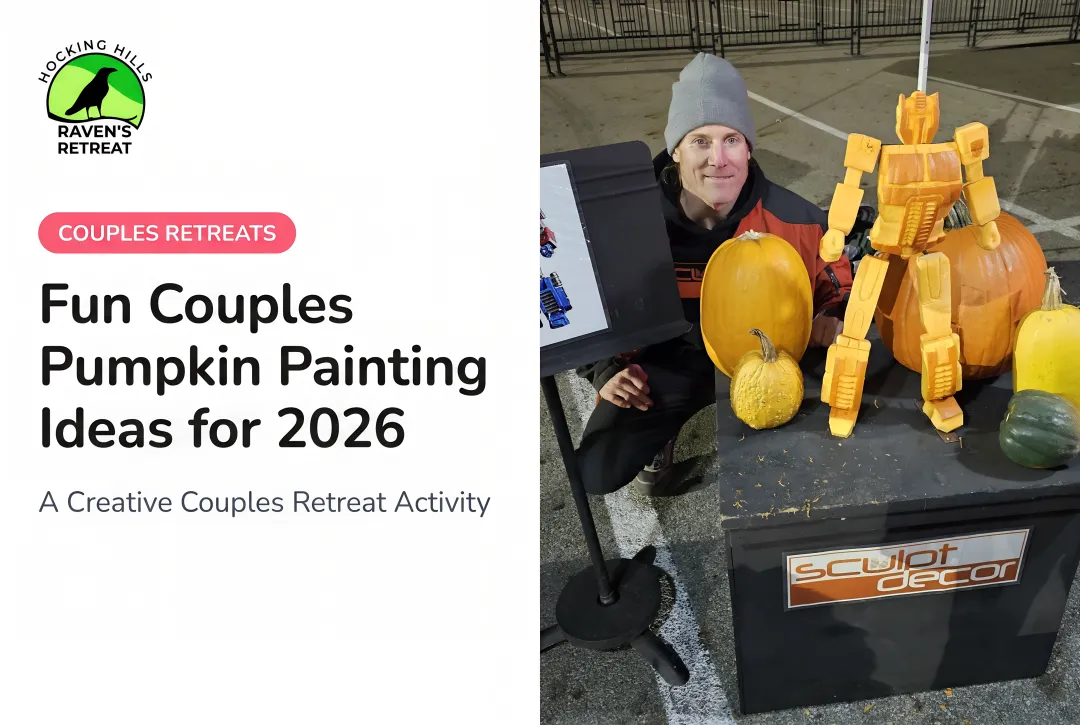
Metal and wood demand full presence. You can't rush a forge or hurry a hand-cut joint - the materials set the pace, and that pace pulls two people into a rare shared focus. At Raven's Retreat, couples work alongside Master Sculptor Dustin Weatherby, whose practice moves between raw steel and hand-hewn wood as naturally as most people move between rooms. What comes out of those sessions isn't just a finished piece - it's the memory of working side by side on something real, something that required both of you.
3. DIY Mosaic Art
Mosaics are collaborative at the planning stage before a single piece is placed. Choosing colors, patterns, and layout requires genuine negotiation — two aesthetics meeting in the middle to produce something neither person would have made alone.
Good material options include:
- Tile or ceramic pieces
- Broken dishes or vintage china
- Sea glass or river stones
- Found objects with personal meaning
5. Collage Making
Cutting images from magazines and arranging them together reveals individual taste in an unguarded way. The gap between what one person pulls and what the other chooses is telling — so is the overlap. Both open up natural conversation about values, memories, and what each person finds beautiful.
6. Resin Art Pouring
Once you pour resin, you're committed. The colors swirl and interact in ways you can't fully control, and trying to fix it usually makes things worse.
This commit-and-adapt quality pushes couples to let go of a planned outcome and find something worth keeping in what actually emerged. The unpredictable results are often the most interesting ones.
7. Jewelry Making
Working with beads, wire, or clay to make something specifically for the other person is an act of attention. You have to think about what they'd actually wear, what they'd love, what would feel like them. Few creative exercises require you to stay that focused on someone else for that long.
Visual & Expressive Activities (8–13)
These activities shift how partners see each other — literally. They require focused observation, the courage to express something personal, and a willingness to look at your partner with fresh eyes.
8. Blind Contour Portrait Drawing
Draw your partner's face without looking at the paper. The results are always gloriously wrong — and that's the point.
The laughter that comes from comparing drawings cuts through any stiffness or self-consciousness. But underneath the humor, something real happens: you spent several minutes actually looking at the person across from you, tracing their features with genuine attention.
9. Shared Vision Board
Paint or collage a vision board that represents what you both want — together. Couples often surface aligned dreams they'd never explicitly discussed — and occasionally, misaligned ones worth knowing about. A 2023 longitudinal study found that couples who coordinated on shared goals reported higher life satisfaction for both partners one year later.
10. Photography Walk
Walk the same path. Photograph different things.
Comparing images afterward is one of the most revealing activities on this list. What your partner noticed, paused for, and found worth capturing is a window into how they experience the world — and it's often surprising even after years together.
11. Relationship Timeline Collage
Build a visual timeline of your relationship using printed photos, found images, ticket stubs, and handwritten notes. The act of revisiting shared history — especially the early, forgotten moments — builds gratitude in a way that's hard to manufacture through conversation alone.
12. Watercolor Painting
Watercolor suits couples who feel intimidated by art. Mistakes blend into something new rather than sitting there accusingly — which makes it one of the most forgiving mediums to share.
It works well because:
- No prior skill is needed; the medium does much of the work
- The fluid, slow-drying quality naturally slows your pace and breathing
- Side-by-side painting removes any pressure to "win" or impress
13. Mandala Creation
Designing a symmetrical mandala together requires meeting in the middle — both literally on the page and figuratively in decision-making. The meditative, repetitive quality of the work quiets the noise of a busy week and creates a rare shared state of calm focus.
Outdoor & Nature-Inspired Activities (14–20)
Nature changes the quality of attention. It removes screens, slows the pace, and provides an ever-shifting backdrop that makes creative work feel more alive. These activities work especially well for couples who feel most themselves outside.
A 2021 review of nature exposure and health found consistent links between time in nature and reduced stress markers, including lower cortisol and heart rate — a solid foundation for the kind of open, unhurried connection these activities support.
14. Plein Air Sketching
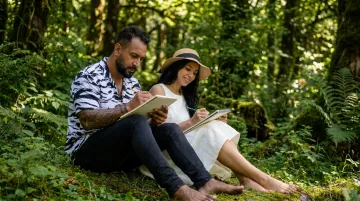
Bring sketchbooks outside and draw what's in front of you — a trail, a tree line, the way light falls through leaves. Working side by side in focused observation creates a shared stillness that's rare to find elsewhere. You don't have to be skilled. You just have to look.
15. Nature Printing
Press leaves, bark, flowers, or feathers with paint or ink onto paper or fabric. The walk to gather materials is half the activity — a shared act of noticing that builds attentiveness to small, beautiful things couples often walk past without seeing.
16. Rock Painting
Collect smooth stones and paint them with symbols, patterns, or messages for each other. Place the finished rocks somewhere meaningful — a favorite trail, a spot you return to. It's a small, lasting mark of your time together in a place you love.
17. Forest Photography Walk
A slow, intentional walk through a wooded area focused not on reaching a destination but on noticing details — light, texture, shadow, the way water moves. Comparing images afterward often reveals surprising differences — one person drawn to texture, the other to light — which opens a conversation most walks never prompt.
18. Outdoor Sculpture Exploration
Visiting a sculpture trail or outdoor art installation adds a dimension gallery visits rarely match. Art encountered unexpectedly in a living landscape opens different conversations than white-wall settings do.
At Raven's Retreat Hocking Hills, near Laurelville, Ohio, Master Sculptor Dustin Weatherby's sculptures, wood carvings, and tile murals are found throughout the property. Couples can book a guided tour of the installations or watch a live sculpture performance — Dustin working raw wood into a finished piece in real time, which is something most people never get to witness.
19. Nature Journaling and Botanical Illustration
Sit together in a natural setting, each sketching plants, insects, or the landscape in personal journals. The goal is observation, not accuracy. Comparing pages afterward is quietly revealing — you see exactly what the other person noticed, what felt worth capturing, what small detail caught their eye instead of yours.
20. Night Sky Watercolor
Paint or sketch the night sky together using watercolor, ink, or pastels. Looking up at something vast — and feeling small in the best possible way — naturally invites the kind of reflection and conversation that doesn't happen easily indoors.
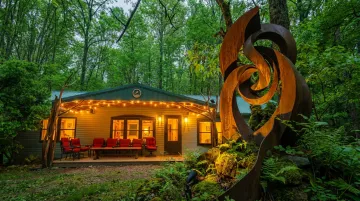
Raven's Retreat was designed with night-sky-friendly lighting to preserve dark skies across the preserve. The Art Bungalow's large screened windows allow unobstructed star viewing from inside — so you can have watercolors in hand and a full sky overhead without stepping out into the cold.
Take Your Creative Connection Further: Plan an Art Retreat
Home art dates are a strong start. But there's a different quality to creative connection when you've fully stepped out of your environment — no dishes, no notifications, no ordinary life crowding the edges of your attention.
Raven's Retreat Hocking Hills is an adults-only, art-immersive retreat center on a 58-acre private nature preserve near Laurelville, Ohio. The property itself is a living work of art: Dustin Weatherby's sculptures, wood carvings, and tile murals are found throughout the property — across private hiking trails and into every interior space.
The Sculptor's Art Bungalow (from $400/night) gives couples a private hot tub, king bed, pond and forest views, and a dedicated creative space designed for two.
Add-on experiences for couples include:
- Live sculpture performances by Dustin Weatherby (a few hours, take-home piece included)
- Guided painting and sculpting workshops
- Certified forest bathing with ANFT-certified guides
- Sound healing, somatic breathwork, and massage
- Plant-based chef meals designed around the retreat's wellness philosophy
For couples who want a fully guided experience, a small-group retreat (limited to 5 couples) runs February 12–15, 2026, including all meals, guided connection experiences, and creative workshops. Or couples can book the bungalow independently and layer in add-ons through a complimentary consultation call with co-founder Raven.
To explore couples experiences at Raven's Retreat, visit ravensretreathockinghills.com/couples-retreats-in-ohio or call 614-783-6143.
Frequently Asked Questions
What are fun activities couples can do together?
Creative and hands-on activities — painting, pottery, photography walks, and collage — go beyond passive entertainment by requiring real-time communication and collaboration. They produce shared memories and tangible keepsakes that stay with you long after the experience ends.
What are unique ideas for couple art?
Less common options like blind contour portrait drawing, nature printing, resin art, and outdoor plein air sketching are unexpected but genuinely accessible. None require prior skill, and the novelty tends to spark more genuine laughter and connection than familiar routines.
Do couples need artistic skills to enjoy art activities together?
No prior experience needed — and imperfect results are often more fun. The focus is on shared process, communication, and play, not polished outcomes. Research supports this: cortisol drops during art-making regardless of skill level.
How do art activities improve a relationship?
Creative activities require nonverbal communication, joint decision-making, and low-stakes vulnerability — all of which build emotional trust over time. They also create a tangible sense of shared accomplishment — something to point to and say "we made that together."
What is the best art activity for couples at home?
Collaborative painting, collage-making, and resin art all work well at home with minimal supplies. Resin and surface painting in particular produce striking results without requiring much setup or prior experience.
Can an art retreat be a good couples experience?
Yes — immersive retreats combining art, nature, and wellness give couples a rare chance to unplug and reconnect away from everyday distractions. Raven's Retreat in Hocking Hills, Ohio, for example, pairs creative workshops and live sculpture performances with forest immersion and guided wellness on a 58-acre private preserve.