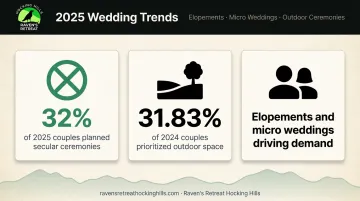
That shift is showing up in the data. According to Zola's 2025 First Look Report, 32% of 2025 couples planned secular ceremonies — and 31.83% of 2024 couples ranked outdoor space as their top venue priority. Elopements, micro weddings, and intimate gatherings are driving much of this demand.
This guide covers the main outdoor civil ceremony venue types, how to choose between them, what to confirm before you book, and how to personalize the space — including a closer look at forest preserve settings in the Midwest.
Key Takeaways
- Civil ceremonies are legally flexible — any licensed outdoor space can work if the logistics are right
- Private venues eliminate public park permit complications and booking restrictions
- Barn/farm venues lead at 17% of venue types; private gardens follow at 9%
- Book peak-season Saturday dates well in advance; private preserves and small retreat venues can fill earlier than larger venues
- Forest retreat venues like Raven's Retreat Hocking Hills support intimate elopements with on-site lodging and natural backdrops included
What Is an Outdoor Civil Ceremony — and Why Couples Are Choosing Them
A civil ceremony is a legally recognized, non-religious marriage officiated by a licensed civil authority — a justice of the peace, judge, mayor, or registered celebrant, depending on your state. There's no requirement for religious content, which makes it highly adaptable: couples write their own vows, choose any music, and pick almost any venue that permits it.
That flexibility makes civil ceremonies work across a wide range of settings and sizes:
- Two-person elopements in a remote forest clearing
- Micro weddings with 20 guests on a private preserve
- Intimate gatherings at vineyards, gardens, or lakeside properties
- Backyard ceremonies with a registered celebrant and a handful of close friends
The format follows the couple's vision entirely, with no institutional structure to work around.
The secular shift is real and growing. According to recent wedding industry surveys, nearly a third of couples now plan religion-free weddings — a figure that's climbed steadily over the past decade. Pair that with the surge in demand for outdoor settings and smaller guest lists, and it's clear why outdoor civil ceremonies have moved from niche alternative to a go-to planning choice for modern couples.
Top Outdoor Civil Ceremony Venue Settings
The setting shapes everything — from ceremony mood to guest logistics. Each venue type suits a different aesthetic and guest count.
Garden Estates and Botanical Gardens
Manicured gardens offer something most outdoor venues don't: built-in color and structure. Sculpted hedgerows, seasonal blooms, shade pergolas, and stone pathways create a polished backdrop that needs minimal added décor.
Private garden estates allow more customization than public botanical gardens, which operate under stricter rules. Public gardens typically treat ceremonies as scheduled events with narrow time windows, guest caps, and restrictions on chairs, decorations, and amplified sound. For example, Brooklyn Botanic Garden limits weekend ceremonies to a single one-hour morning window with no chairs, tables, or decorations permitted.
Key considerations for garden venues:
- Confirm bloom schedules — a garden in May looks very different in August
- Ask whether shade structures exist for afternoon heat
- Verify whether the garden allows your own officiant and florist
- Check whether inclement weather triggers an indoor backup or a cancellation
Forest and Nature Preserve Settings
Forested settings offer privacy, a natural canopy, and filtered light that no decorator can replicate. For elopements and micro weddings, these venues create an immersive atmosphere where the ceremony feels contained and intimate without feeling staged.
The key distinction: private nature preserves eliminate the permit complications common at public parks. Ohio state parks, for instance, require an ODNR Special Activity Permit with at least 30 days' lead time, and some venues restrict sound, seating, and decorations.
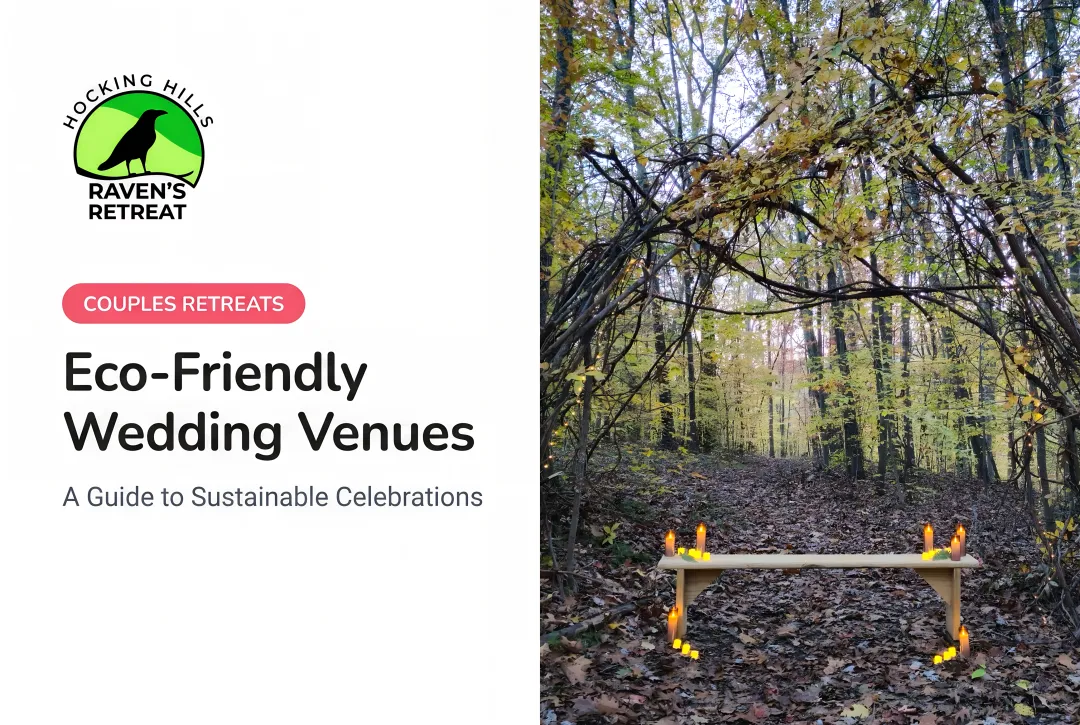
Raven's Retreat Hocking Hills, located on a 58-acre private preserve near Laurelville, Ohio, shows what this setting can be at its best. Co-Founders Raven Morgan and master sculptor Dustin Weatherby have created custom sculptures, wood carvings, and immersive art installations within the property, turning it into a compelling forest landscape backdrop.
The ceremony infrastructure is already in place:
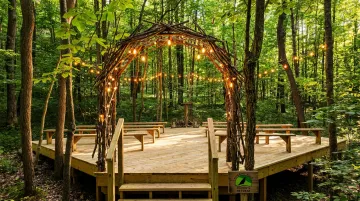
- A 24 ft × 24 ft elevated wooden platform above the forest floor
- A rustic arch constructed from natural materials with warm lighting
- Wooden benches for guest seating on either side
- Ravine-front photo locations and over a mile of private trails
Raven's Retreat holds a 4.96 on Airbnb (256 reviews), 4.95 on VRBO (38 reviews), and 4.97 on Google (93 reviews) — and accommodates elopements and micro weddings with full property buyout available.
Waterfront and Lakeside Venues
Water settings — lakefronts, rivers, coastal properties — create natural focal points and the kind of soft, reflective light that makes ceremony photography exceptional, especially during golden hour.
Wind is a consistent planning issue at waterfront venues, according to The Knot, affecting audio equipment, lightweight florals, and attire. Beach settings can also create accessibility challenges for guests with mobility limitations, and seasonal water levels may shift the visual quality of the backdrop.
Before booking a waterfront venue, confirm:
- Tide timing or seasonal water levels
- Whether a covered indoor space is available as backup
- Accessible pathways from parking to ceremony site
- Whether permits apply for the specific water body
Countryside Ranch and Farm Estates
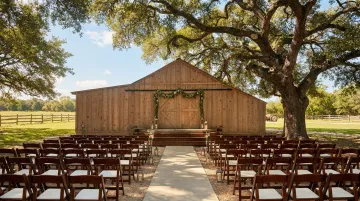
Ranch and farm venues hold the largest share of outdoor venue types at 17%, according to The Knot — and the appeal is obvious. Open skies, pastoral views, and flexible outdoor layouts can scale from a 20-person ceremony to 200+ guests. Rustic barns, split-rail fences, and wide-open fields provide a backdrop that needs little additional styling.
The logistics require more attention than the aesthetic suggests:
- Unpaved parking areas become problematic in rain
- Heat management matters — afternoon ceremonies on open land with no shade can be uncomfortable
- Elderly or mobility-limited guests may struggle with uneven terrain
- Many farm venues are designed for large receptions, not intimate ceremonies — confirm the property supports smaller guest counts before visiting
Private Retreat Centers and Glamping Properties
Retreat centers and glamping properties are increasingly chosen for civil ceremonies for one specific reason: they turn a single-day event into a multi-day experience. Full property buyout options, on-site lodging, and curated amenities eliminate the coordination complexity of a traditional wedding day.
The Knot's 2026 venue trend report specifically calls out desert glamping, cliffside retreats, and mountain cabins as formats that "stand out" for outdoor intimacy. Zola data backs this up — 31.90% of 2024 couples planned a welcome party, signaling the shift toward multi-day wedding experiences.
Strong retreat venues offer:
- Full property exclusivity (no other guests during your stay)
- On-site coordination or a dedicated host
- Both ceremony infrastructure and overnight lodging in one booking
- Add-on experiences (chef meals, wellness programming, live performances)
How to Choose the Right Outdoor Civil Ceremony Venue
Venue aesthetics are easy to fall for — but logistics determine whether your ceremony actually runs smoothly. Confirm the practical details first, then let the scenery seal the decision.
Legal and Logistical Checklist
Work through these before signing anything:
- Does the venue explicitly allow civil ceremonies with an outside licensed officiant?
- Private venues typically handle permits; public parks or botanical gardens may require a separate Special Activity Permit
- Amplified sound is subject to noise ordinances — confirm restrictions before booking a DJ or PA system
- Rural outdoor venues sometimes lack adequate restroom facilities for guests
- Check that pathways, parking, and the ceremony surface itself meet ADA accessibility standards
Guest Experience Factors
- Shade availability for afternoon ceremonies in summer
- Distance between ceremony and reception or dining areas
- Seating comfort for elderly guests
- What happens if it rains — is the backup space included in the rental?
Vendor and Customization Policies
Get clear answers on these before committing:
- Can you bring an outside caterer, florist, and photographer?
- Are there preferred vendor lists with exclusivity requirements?
- What are the setup and breakdown windows?
- Does the rental include chairs, an arch structure, and basic furniture?
Season and Timing
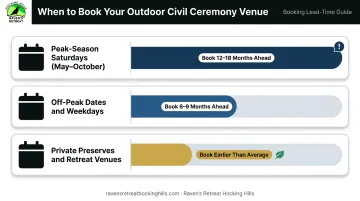
According to The Knot, 76% of weddings occur May through October, with October and June each accounting for 16%. Booking windows vary significantly by date and venue type:
- Peak-season Saturdays (May–October): Book well in advance
- Off-peak dates and weekday ceremonies: Contact venues early to confirm availability
- Private preserves and small retreat venues: May fill earlier than larger venues due to limited capacity
How to Style and Personalize Your Outdoor Civil Ceremony Space
Your ceremony arch or backdrop sets the visual tone for the entire space. The right choice depends on what the venue's landscape already provides.
Common backdrop options:
- Floral arches — lush and photogenic, but require a florist and setup time
- Geometric metal frames — clean lines that suit garden or modern ranch settings
- Draped fabric structures — romantic, wind-sensitive, best for sheltered locations
- Natural tree canopies — works when the venue's forest or garden provides a defined focal point
Aisle layout and lighting are worth planning together. Straight chair rows suit formal garden settings; semicircular or lounge-style arrangements feel more intimate in forest or field venues. For lighting, glass hurricane lanterns with battery-powered candles outperform open flames in wind — a reliable choice for most outdoor settings.
Personalization ideas that work:
- Custom signage at the ceremony entrance or aisle
- Cultural ceremony elements woven into the vows or processional
- Repurposed botanical pieces (branches, pampas grass, seasonal foliage) that echo the venue's natural palette
At venues like Raven's Retreat in Hocking Hills, Ohio, the property itself does most of the visual work — particularly for intimate elopements and micro ceremonies. Master sculptor Dustin Weatherby's sculptures, wood carvings, and immersive installations are found throughout the property. The forest platform, rustic arch, and warm lighting are in place before you arrive. Couples typically add only small personal touches, since the setting already provides the backdrop.
That eco-conscious philosophy extends to what's permitted on-site. Raven's Retreat prohibits candles and confetti or glitter to protect the preserve's wildlife habitat and rewilding mission. The hosts offer eco-approved alternatives — confirm specifics when booking.
Conclusion
The ideal outdoor civil ceremony venue is where natural setting, logistical infrastructure, and legal compliance all align with your vision. Whether that's a manicured botanical garden, a wind-swept lakefront, a pastoral ranch, or an immersive forest preserve, the right choice depends on your mood, guest count, and how much of the experience you want to extend beyond the ceremony itself.
For couples seeking an art-and-nature-infused outdoor civil ceremony in the Midwest, Raven's Retreat Hocking Hills is a 58-acre private preserve near Hocking Hills, Ohio, with everything already in place:
- Ceremony-ready outdoor spaces within a rewilded nature preserve
- Full property buyout for up to 18 overnight guests
- Customizable add-on experiences, from sound healing to chef-prepared delicious, healthy meals
- On-site hosting from Co-Founders Raven Morgan and Dustin Weatherby — both ordained ministers who can officiate your ceremony, simplifying the planning process considerably
It's located just one hour from Columbus and minutes from Hocking Hills State Park.
To inquire about availability, reach out at stay@ravensretreathockinghills.com or call 614-783-6143.
Frequently Asked Questions
Can you get married in a park for free?
Some public parks allow low-cost ceremonies, but most require a Special Activity Permit — Ohio state parks charge a $40 processing fee, and NPS sites like Yosemite and Great Smoky Mountains charge $100 and $50 respectively. Many public parks also restrict chairs, arches, amplified sound, and decorations. Private venues eliminate these uncertainties entirely.
Is $10,000 a reasonable wedding budget?
It can work for a micro wedding or elopement. The Knot's 2024 data puts weddings with 50 guests or fewer at an average of $15,000, so hitting $10,000 means keeping the guest list tight, choosing a weekday date, and prioritizing the venue and officiant over large catering spreads.
What is legally required for an outdoor civil ceremony?
You need a valid marriage license, a licensed officiant (judge, mayor, or registered minister depending on your state), and in most states one or two witnesses to sign the certificate. In Ohio, licenses are valid for 60 days and are issued by the county probate court — confirm your state's specifics with a local county clerk.
How far in advance should you book an outdoor civil ceremony venue?
Book as early as possible for peak-season Saturday bookings; private preserve and retreat venues with limited overnight capacity can fill earlier than larger venues, so contact them first.
What is the best season for an outdoor civil ceremony?
Spring and fall offer the most comfortable temperatures and scenic variety across most U.S. regions. Fall leads at 35% of all weddings, summer follows at 33%. In the Hocking Hills region specifically, fall foliage, spring wildflowers, and winter ice formations each create a distinct atmosphere. Regardless of season, always confirm a weather backup plan with your venue before booking.
What is the difference between a civil ceremony and a religious ceremony when choosing a venue?
Civil ceremonies have no religious content requirements — vows, music, and venue are entirely up to the couple, meaning any licensed outdoor space can work. Religious ceremonies may require a house of worship or a clergy member willing to officiate off-site, which can narrow venue options considerably.