Introduction
Planning a wedding feels joyful until you start looking at the numbers. The average wedding generates 400-600 pounds of garbage and carries a carbon footprint of roughly 63 metric tons of CO2 — more than most households produce in a year, according to the Center for Biological Diversity.
That tension is real. Couples want a beautiful, memorable celebration — and more are arriving at the altar with genuine environmental awareness.
Eco-friendly weddings have moved well past niche status. Choosing a sustainable venue, seasonal flowers, and a local menu isn't a compromise. It's a more deliberate, more personal choice that often produces a better celebration.
This guide covers what actually makes a venue eco-friendly, how to rethink florals and décor, what zero-waste catering actually involves, and why intimate forest ceremonies are among the most impactful choices a couple can make.
Key Takeaways
- Guest count is the single biggest driver of a wedding's environmental footprint — fewer guests means less of everything.
- Natural venues with built-in landscapes eliminate most décor needs from the start.
- Local, seasonal food and foam-free florals cut carbon more than most couples realize.
- Renting, donating, and composting keep nearly all wedding waste out of landfills.
- A forest elopement or micro-wedding can be visually stunning and ecologically responsible.
What Makes a Wedding Venue Truly Eco-Friendly?
"Outdoor" and "rustic" don't automatically mean sustainable. A barn venue with diesel generators and imported florals can carry a larger footprint than a thoughtfully designed indoor space. Before booking, ask specific questions.
Credentials and Operations to Ask About
- Energy sourcing — Does the venue use solar panels, renewable energy contracts, or energy-efficient building systems?
- Water conservation — Are low-flow fixtures and rainwater management systems in place?
- Waste systems — Does the property compost? Is there clear recycling guidance for events?
- Local sourcing — Can the venue connect you with nearby caterers, chefs, or food suppliers?
- Certifications — ISO 20121 covers event sustainability management; LEED addresses energy, water, materials, and waste.
The Built-In Décor Advantage
Natural landscapes do something conventional venues can't: they eliminate the need for most decoration before you spend a dollar. Forest canopies provide natural framing and filtered light. Native plantings replace imported arrangements. A creek or ravine offers more visual drama than a floral arch costing thousands.
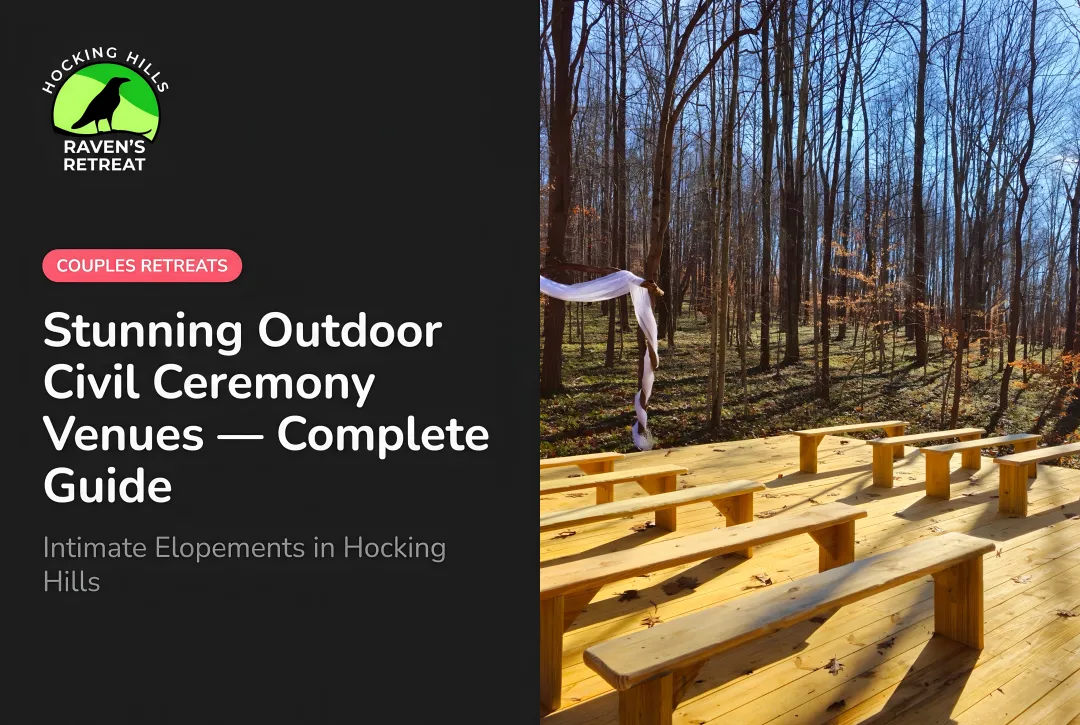
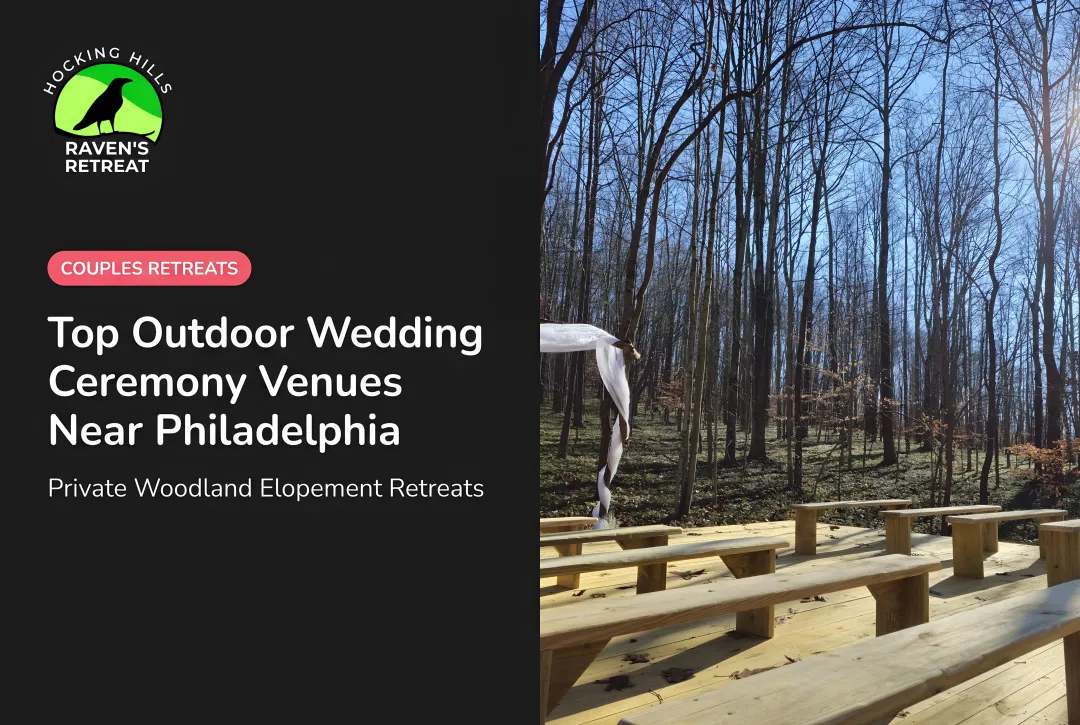
Raven's Retreat Hocking Hills, a 58-acre private nature preserve near Laurelville, Ohio, puts this into practice for elopements and intimate ceremonies. The property features a 24-by-24-foot elevated wooden platform in the forest, already equipped with a rustic arch and guest benches, so couples arrive to a ceremony space that needs nothing added. Dustin Weatherby's hand-crafted art installations — steel sculptures, wood carvings, tile murals — are woven throughout the landscape as permanent artistic focal points, eliminating any need for outside décor vendors.
Practical Sustainability Features Worth Prioritizing
| Feature | Why It Matters |
|---|---|
| Dual ceremony + reception site | Eliminates inter-venue transportation entirely |
| EV charging station | Supports guests arriving by electric vehicle |
| On-site composting | Captures organic waste from catering |
| Solar panels | Reduces grid energy dependency |
| Recycled/upcycled building materials | Lowers embodied carbon of the structure |
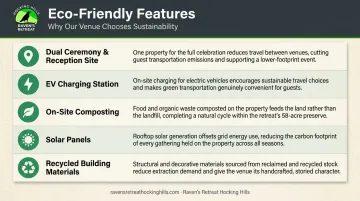
Raven's Retreat covers most of these categories. Solar panels, low-flow water fixtures, composting stations, a Tesla J1772 EV charging station, and architecture built from local fallen trees and reclaimed materials are all part of the property's design. For elopements and small intimate ceremonies, the entire event stays within the same forest preserve, so guests never need to travel between venues.
Sustainable Ceremony Design: Florals, Décor, and Natural Atmosphere
The Real Cost of Cut Flowers
Colombia supplies approximately 60% of flowers sold in the United States, and most arrive by air freight. A 2025 cut-flower supply chain review found that greenhouse-grown roses can generate 2.5-3.5 kg CO2-equivalent per stem, with long-haul air transport adding another kilogram or more on top of that. For a wedding with hundreds of blooms, that can mean several hundred kilograms of CO2 before a single arrangement hits the altar.
The fix is straightforward: look for local farms that grow seasonal varieties with organic or low-pesticide practices. Ask your florist specifically where flowers are grown and how they arrive.
Eco-Friendly Alternatives to Traditional Arrangements
- Potted herbs and native plants guests can take home and transplant
- Dried wildflower arrangements — beautiful, long-lasting, zero transport footprint
- Locally foraged greenery — ferns, branches, mosses sourced within the region
- Succulents — hardy, reusable, and easy to rehome after the event
- Foam-free floral design — floral foam is a microplastic that contaminates waterways
Beyond the Flowers
For everything else, renting beats buying. Lanterns, linens, stemware, tableware — all of these can be rented from local vendors, used beautifully, and returned without generating waste. Items the couple already owns (mirrors, fabric draping, signage) serve double duty as home décor later.
After the wedding, the same mindset applies to what you do with everything that's left. A few easy closes:
- Redistribute flower arrangements to hospitals, senior centers, or shelters through your florist or a local nonprofit
- Compost all organic materials on-site or through a local service
- Donate usable décor items to thrift stores rather than binning them
For the exit toss, skip paper confetti and synthetic materials entirely. Lavender buds, dried rose petals, or micro-flowers handed out in kraft paper bags are biodegradable, photogenic, and harmless to the surrounding ecosystem.
Farm-to-Table Catering and Zero-Waste Dining
Food sourcing shapes a wedding's carbon footprint, and waste makes the problem worse. The USDA estimates 30-40% of the U.S. food supply is wasted, and event catering is no exception. A 2020 catering study found buffet leftovers ranging from 74 to 280 grams per guest depending on how service was managed.
How to Minimize Food Waste at Your Wedding
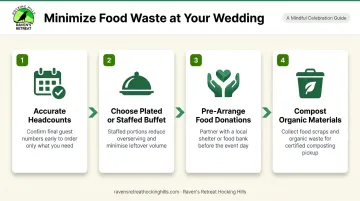
- Get accurate headcounts — firm RSVP deadlines help caterers plan realistic portions
- Choose plated dinners or staffed buffets — both generate significantly less leftover food than self-serve stations
- Pre-arrange food donations — the Bill Emerson Good Samaritan Food Donation Act protects good-faith food donations to nonprofits, so build this into your catering contract before the event
- Compost organic materials — ask your venue whether composting infrastructure is in place
Some venues already have these systems built in. Raven's Retreat integrates composting bins throughout the property and coordinates with vetted private chefs who build plant-forward menus from seasonal ingredients. For couples hosting intimate elopements or micro-ceremonies, that alignment between menu and values comes standard — plant-forward menus also carry a significantly lower carbon cost than meat-heavy alternatives.
Beverages Worth Reconsidering
- Choose locally produced wines or craft beers — regional producers reduce transport emissions dramatically
- Look for USDA Certified Organic or Demeter-certified biodynamic wines for verified sustainable agriculture practices
- Pour from magnum bottles rather than individual bottles — fewer units, less packaging, less recyclable waste per pour
Invitations, Attire, Favors, and Transportation
Individually, these choices seem small. Across a full guest list, they compound fast.
Invitations and Stationery
Digital invitations eliminate paper and postal emissions entirely. For couples who prefer printed suites, two sustainable options stand out: Botanical PaperWorks sells plantable seed paper invitations that grow wildflowers when planted, and Paper Culture uses 100% post-consumer recycled paper for all wedding stationery.
Attire and Favors
- Rent or buy secondhand — Lyst reported a 93% year-over-year increase in searches for pre-owned wedding dresses in 2019, and the market has grown steadily since
- Choose designers using recycled or ethically sourced fabrics for new purchases
- Eco-friendly favors that guests actually keep: seed packets, small succulents, locally made honey or jam, or a charitable donation made in each guest's name
Transportation
Guest travel is one of the most overlooked variables in a wedding's total footprint. Research on event travel consistently identifies attendee transportation — particularly air travel — as a dominant emissions source.
Practical steps:
- Choose a venue that minimizes total travel distance for the majority of guests
- Offer a shuttle between a shared hotel block and the venue to consolidate car trips
- Communicate carpooling options clearly on the wedding website
- Select a single site for both ceremony and reception, eliminating an extra transportation leg entirely
Why Micro-Weddings and Forest Elopements Are the Most Sustainable Choice
The math here is straightforward. Guest count multiplies every impact category: meals, flights, overnight stays, florals, favors, printed materials, and rentals. Cut the guest list and you reduce all of them simultaneously.
The Knot defines micro-weddings as events with roughly 50 or fewer guests. Forest elopements typically involve fewer than 20. Neither format requires a published life-cycle analysis to make the case — fewer guests simply means less of everything that generates waste.
Why the Forest Setting Works
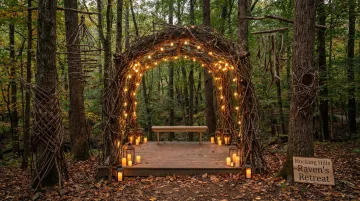
A nature preserve setting reduces décor needs by definition. The landscape provides visual richness, atmospheric lighting, and natural sound that no floral budget can replicate. Ceremony infrastructure — like the elevated forest platform, rustic arch, and wooden benches at Raven's Retreat — is already in place, so couples aren't sourcing and transporting décor from outside vendors.
The retreat's 58-acre private preserve near Hocking Hills State Park sits about an hour from Columbus, keeping travel distances manageable for most Midwest guests. The property features over a mile of private hiking trails, natural springs, a pond, forest meditation zones, and a dedicated yoga platform — all available as part of a multi-day elopement experience.
The Experience-Based Wedding Shift
Couples are trading large guest lists for immersive, presence-focused celebrations. A two-night stay at a private forest preserve — with forest bathing, a plant-based chef dinner, a live sculpture performance, and a ceremony on an elevated woodland platform — creates a more memorable event than a ballroom reception for 150.
At Raven's Retreat, couples can arrange a full property buyout for complete privacy, with overnight lodging for up to 18 on-site. Both Raven Morgan and Dustin Weatherby are ordained ministers and can officiate the ceremony themselves, keeping the entire experience within the retreat and reducing the vendor coordination couples typically face. Custom add-ons let couples build a ceremony weekend that reflects exactly what they value:
- Guided meditation and forest bathing
- Sound healing and somatic breathwork
- Wild-edibles tours with a naturalist
- Private chef-prepared delicious, healthy meals
- Live sculpture performance by master sculptor Dustin Weatherby
Leave-no-trace matters here too. The preserve is an active wildlife release site home to endangered species including whippoorwill birds and two-lined salamanders. Raven's Retreat maintains strict policies: guests stay on marked trails, no glitter or confetti, no strong scents, quiet hours from 10 PM to 8 AM. These policies exist because the ecosystem itself is what makes the property worth visiting.
Frequently Asked Questions
What makes a wedding venue eco-friendly?
Look for renewable energy use, on-site composting and water conservation systems, a natural setting that reduces décor needs, local food sourcing relationships, and a single site that hosts both ceremony and reception. Certifications like ISO 20121 or LEED provide third-party verification of sustainable operations.
Are smaller weddings really more sustainable?
Yes. Guest count is the most impactful variable in a wedding's environmental footprint. Fewer guests means fewer meals prepared, fewer travel trips, less floral volume, fewer favors and invitations, and less material consumption across every category.
What are the most wasteful parts of a traditional wedding?
The biggest offenders: imported cut flowers shipped by air freight, food waste from oversized catering portions, single-use décor and paper goods, long-distance guest travel (especially flights), and fast-fashion attire purchased once and rarely worn again.
What is a zero-waste wedding and is it achievable?
A zero-waste wedding minimizes landfill waste through renting instead of buying, composting organics, donating food leftovers, and choosing reusable or biodegradable items. A truly zero-waste event is hard to achieve, but meaningful reduction is realistic for most couples.
Can you have a beautiful wedding without a large environmental footprint?
Absolutely. Nature-based venues with built-in landscape beauty — like a private forest preserve — paired with locally sourced food, foam-free florals, and an intimate guest count can deliver a stunning, personal wedding at a fraction of the ecological impact of a conventional celebration. Raven's Retreat Hocking Hills, set on a 58-acre rewilded preserve in Ohio, is one example of a setting where eco-conscious design does the heavy lifting for you.